
HOME ORGANIZATION / INSPIRATION
49 Beautiful Toy Storage Ideas for Family Living Rooms
Realistic design inspiration for a family living room that looks beautiful, works for kids, and makes cleanup easier. Explore 49 practical ideas, one photo at a time.
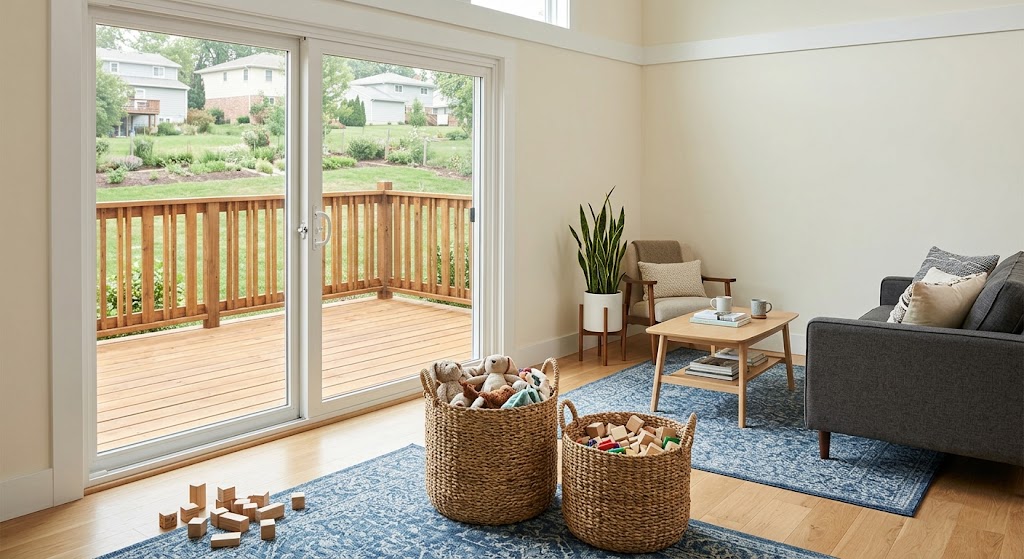
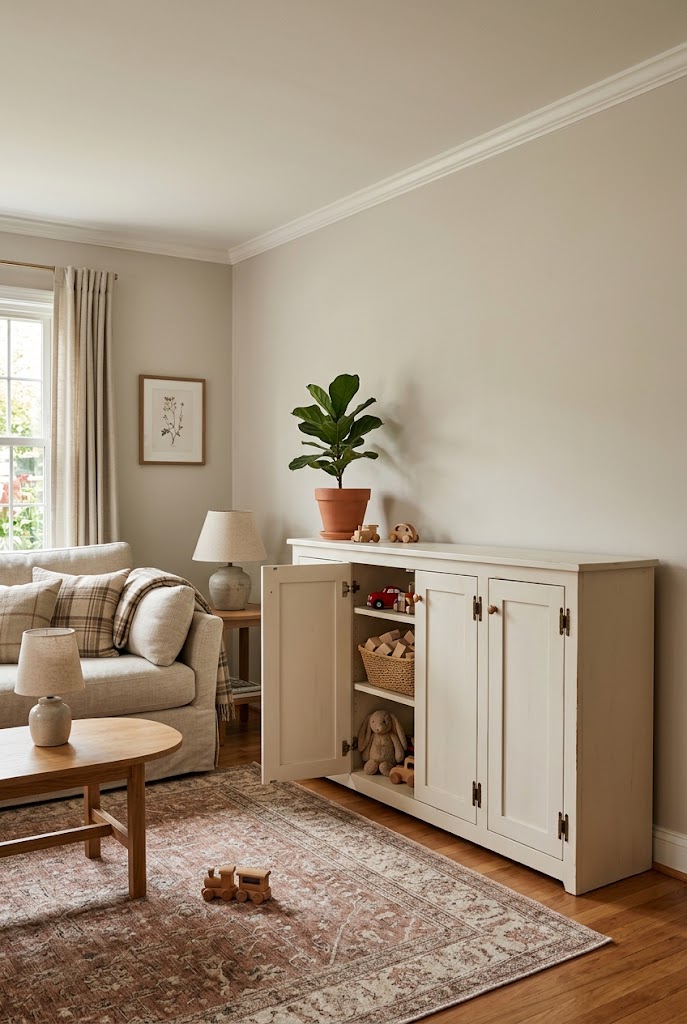
PHOTO 01 OF 49
Hidden storage cabinet
Keep the toys behind closed doors
Choose a low cabinet with doors that children can open independently; reserve the easiest shelves for the toys used every day.
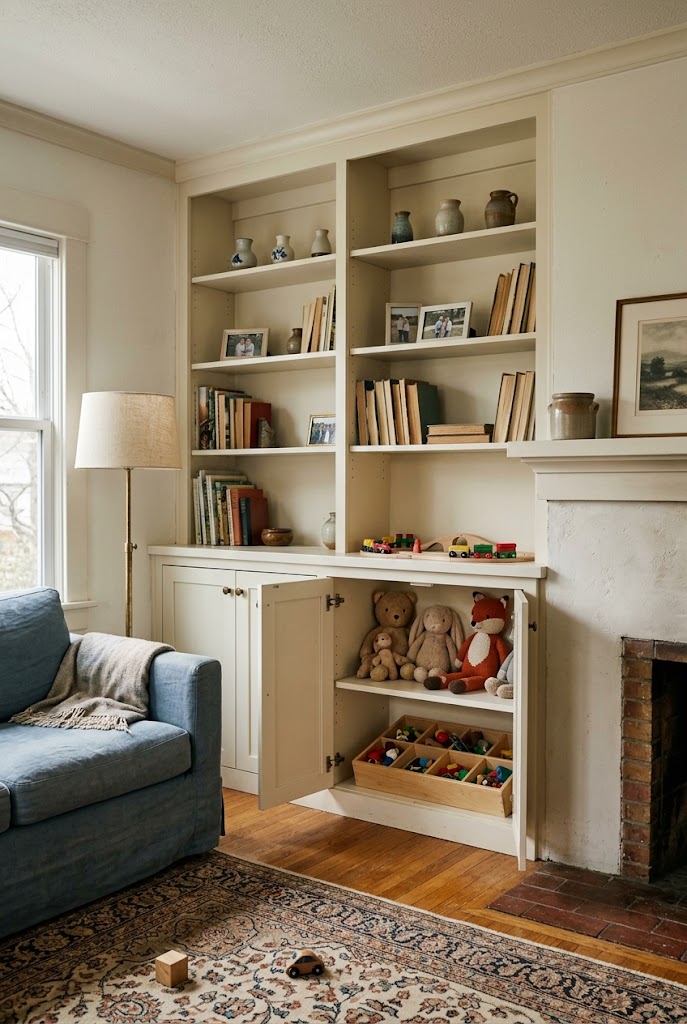
PHOTO 02 OF 49
Built-in lower cabinets
Make the bottom cabinets the toy zone
Use the closed cupboards beneath display shelves for puzzles and play sets, leaving the upper shelves for adult books and décor.
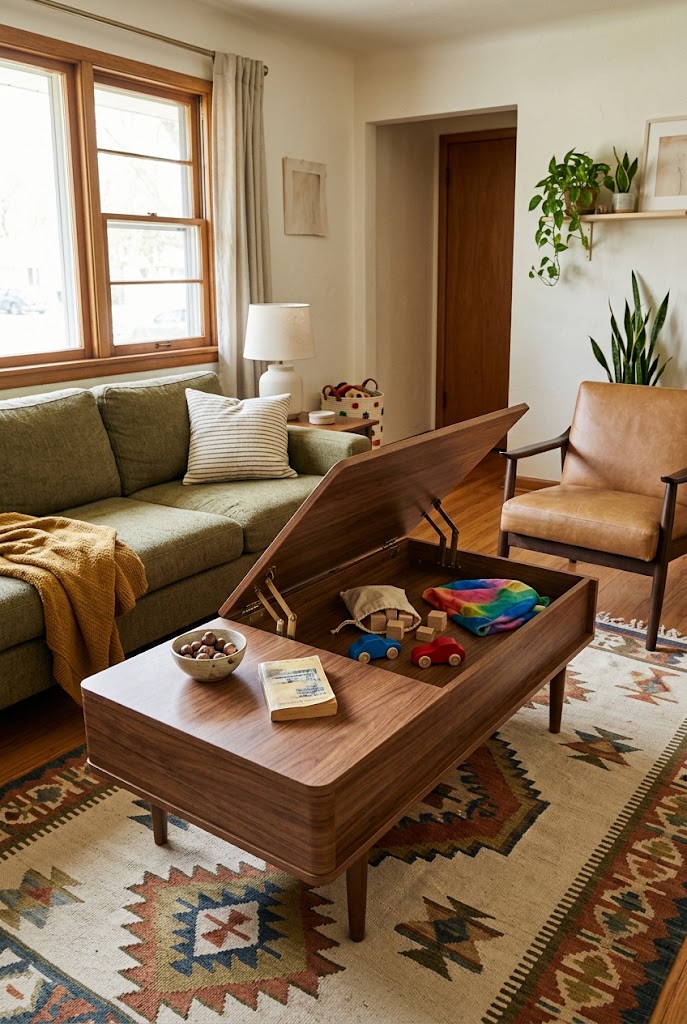
PHOTO 03 OF 49
Storage coffee table
Put toys inside the coffee table
A lift-top or drawer coffee table can hold small toys without adding another piece of furniture to a tight family room.
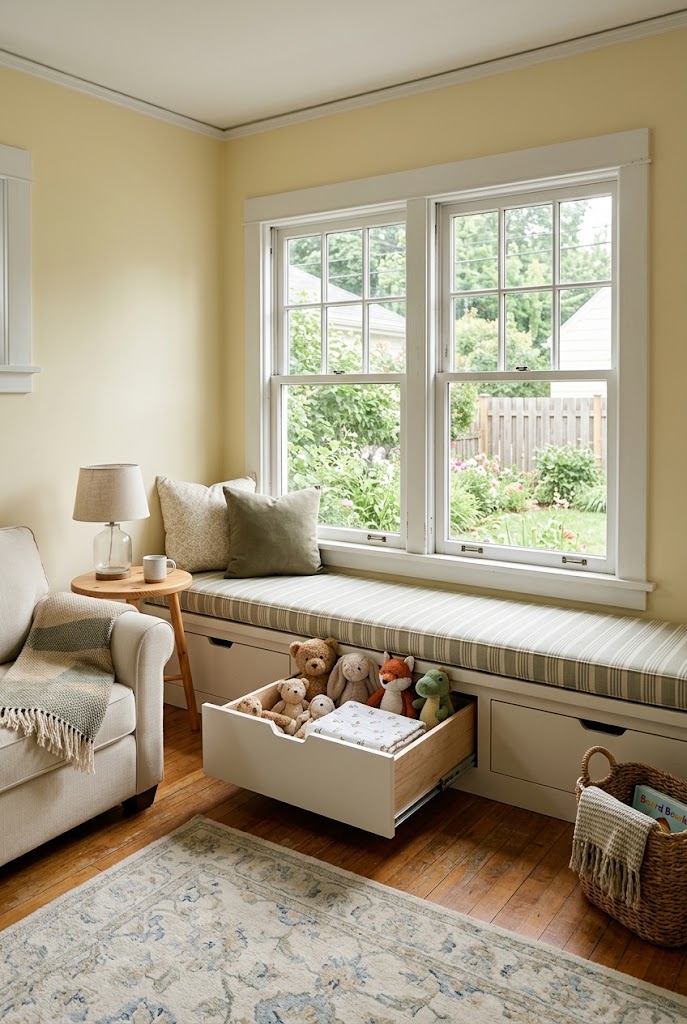
PHOTO 04 OF 49
Window-seat storage
Add play storage beneath a window seat
Deep drawers beneath a padded seat keep blocks and soft toys out of sight while preserving a comfortable reading spot.
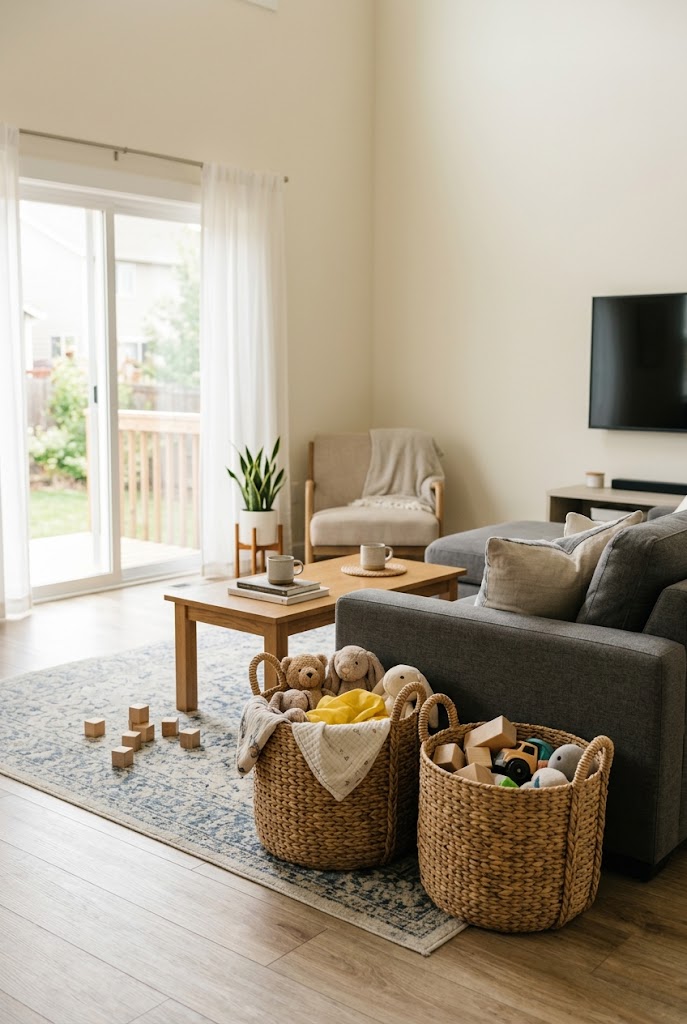
PHOTO 05 OF 49
One accessible toy drawer
Let one drawer show children where things go
Designate a roomy, easy-to-open lower drawer for the toys kids can put away without adult help.
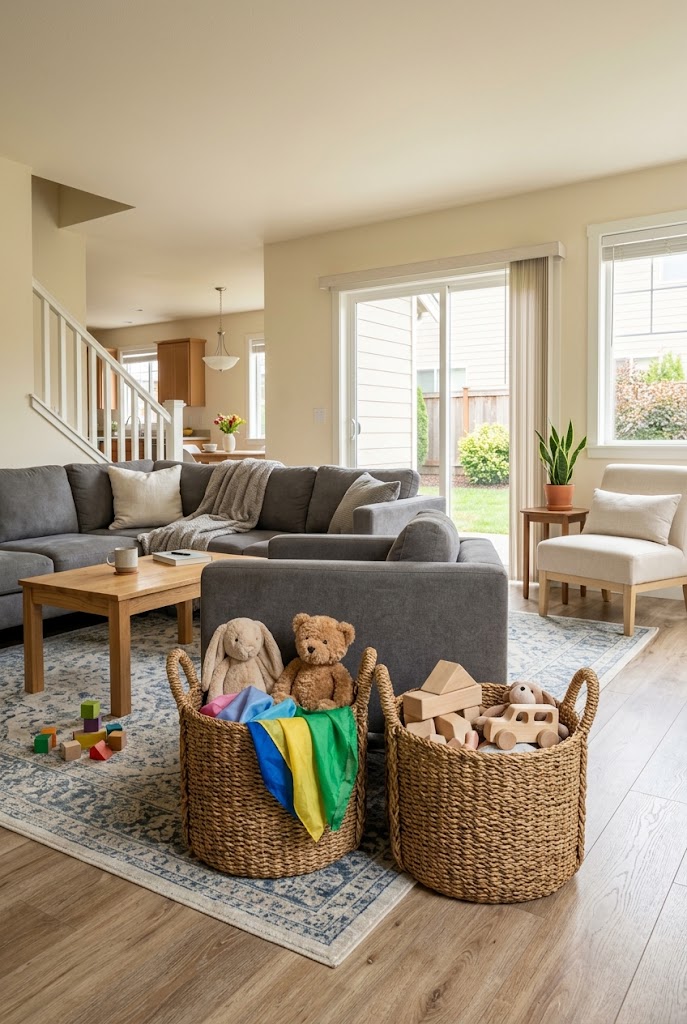
PHOTO 06 OF 49
Oversized woven baskets
Gather large toys in one oversized basket
A broad, sturdy basket beside the sofa makes cleanup simple for stuffed animals and other lightweight toys.
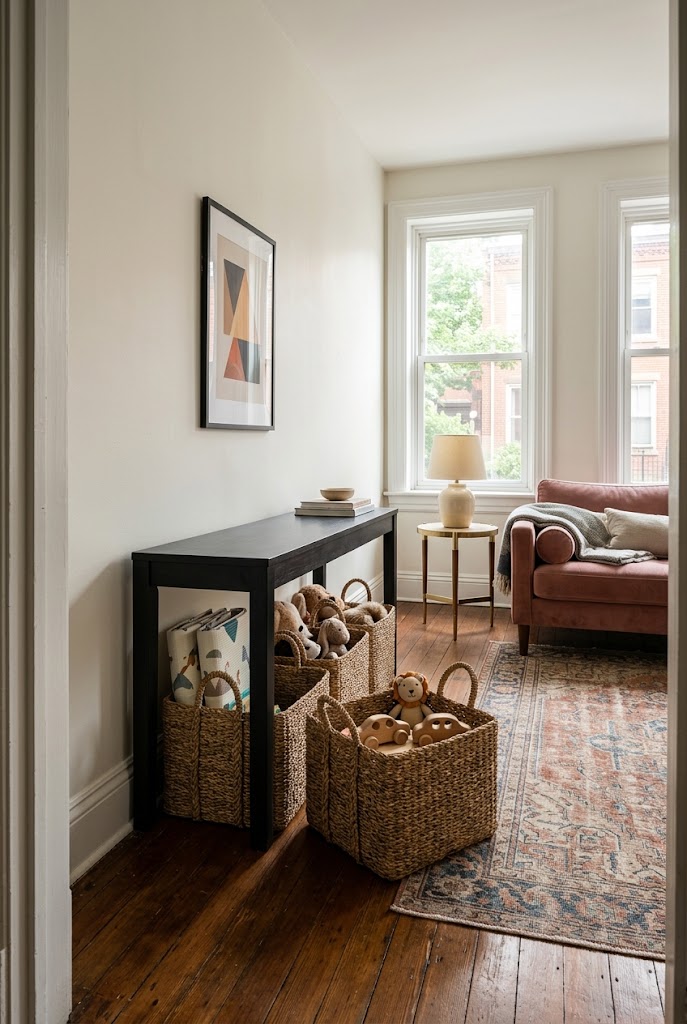
PHOTO 07 OF 49
Under-console baskets
Slide baskets beneath the living room console
Open space under a slim console can become convenient storage for play silks, puppets, and other soft toys.
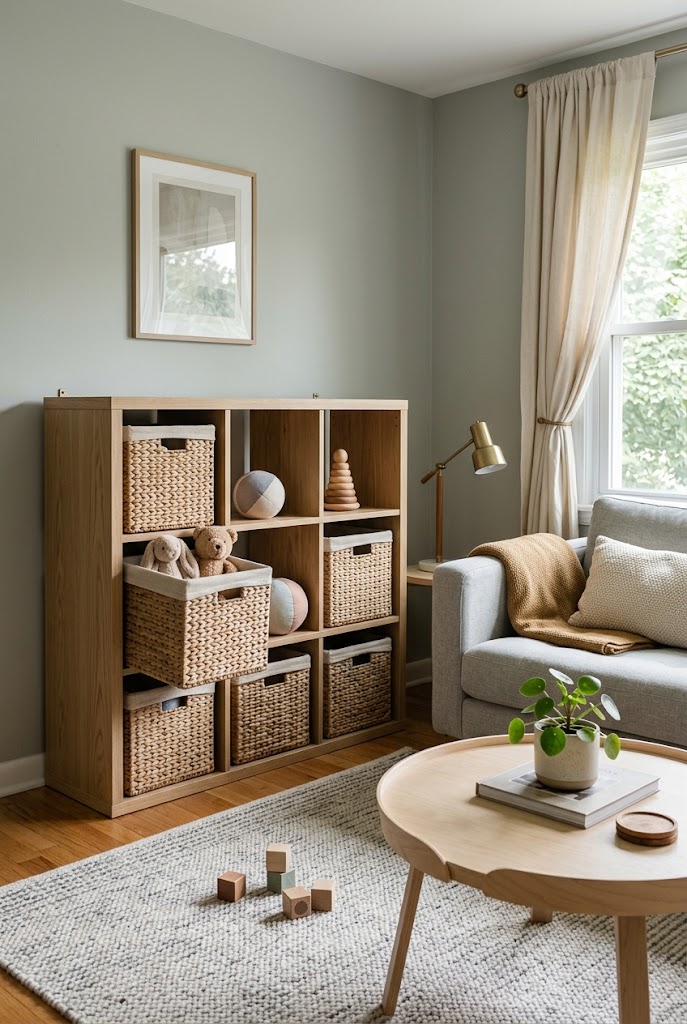
PHOTO 08 OF 49
Matching open-shelf baskets
Use baskets to calm a busy bookshelf
Group smaller toys in a few coordinating baskets, while keeping one or two favorite playthings visible and easy to grab.
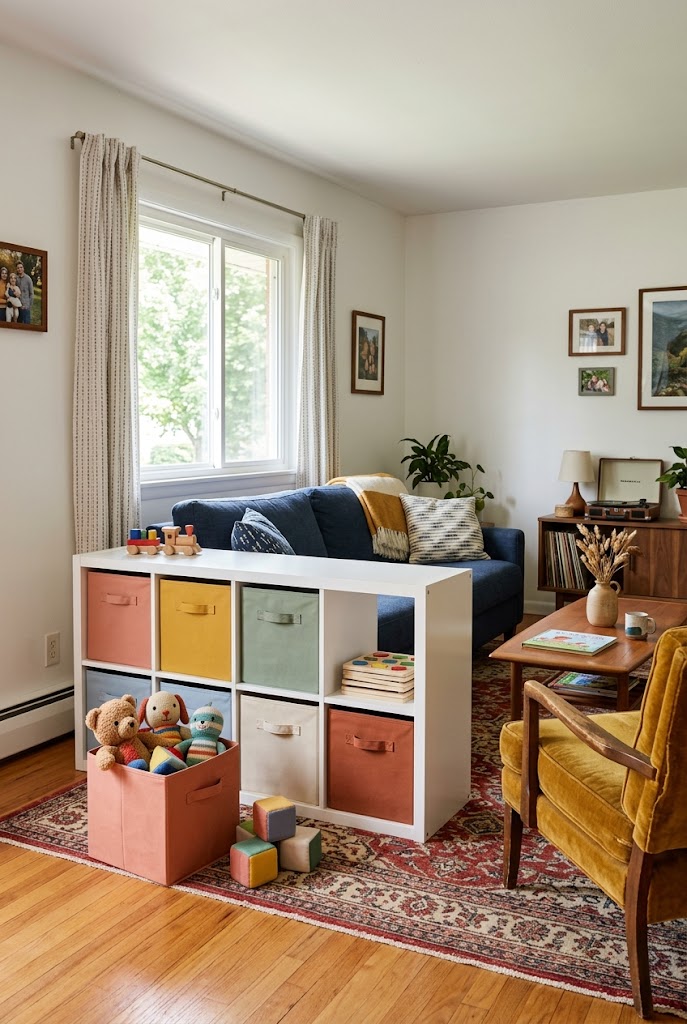
PHOTO 09 OF 49
Colorful fabric bins
Give toy categories their own soft bins
Fabric bins in a low unit let kids sort pretend-play pieces and building toys without exposing every small object.
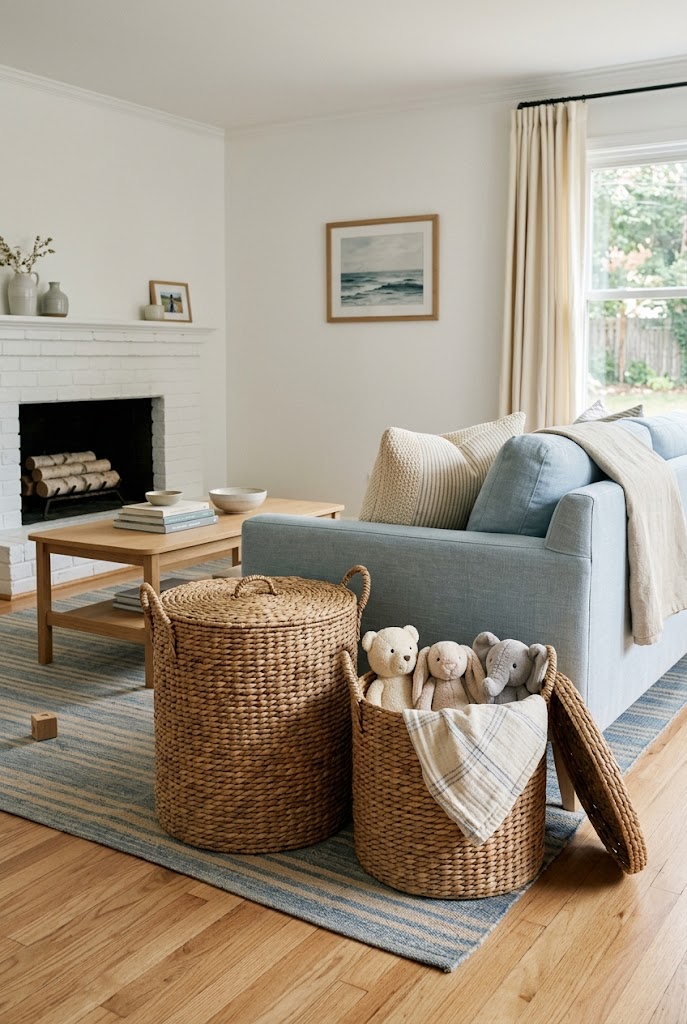
PHOTO 10 OF 49
Lidded basket pair
Use a lidded basket for evening cleanup
Keep toys for occasional play under a lid, and reserve an open basket for the things that come out every day.
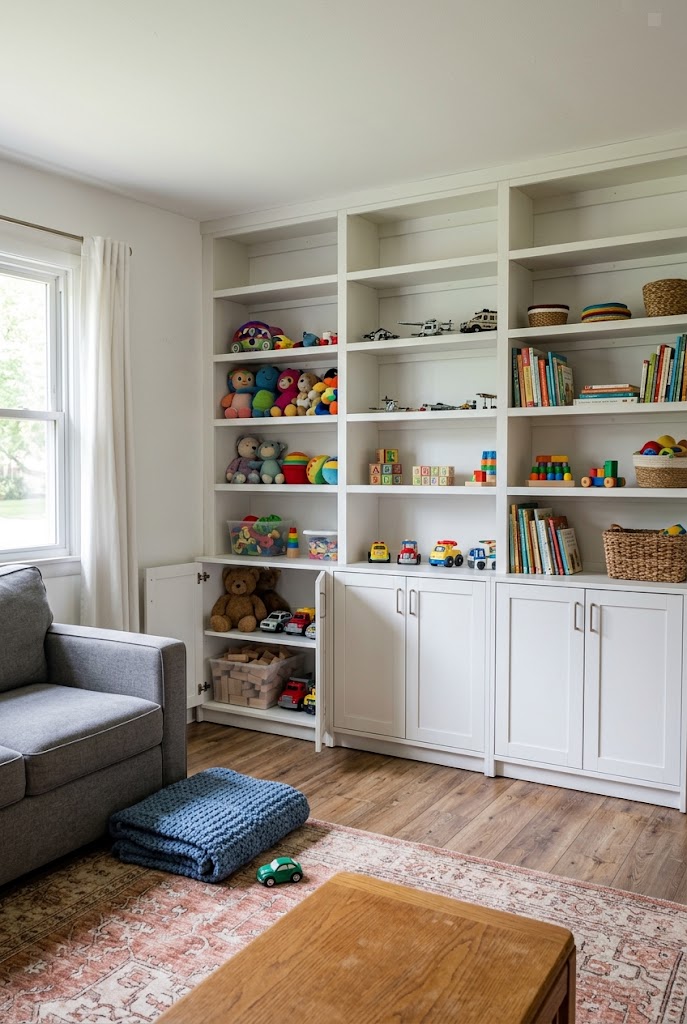
PHOTO 11 OF 49
Affordable built-in look
Create a built-in look with modular cabinets
Line up identical, anchored ready-made storage units to create an orderly wall without custom cabinetry.
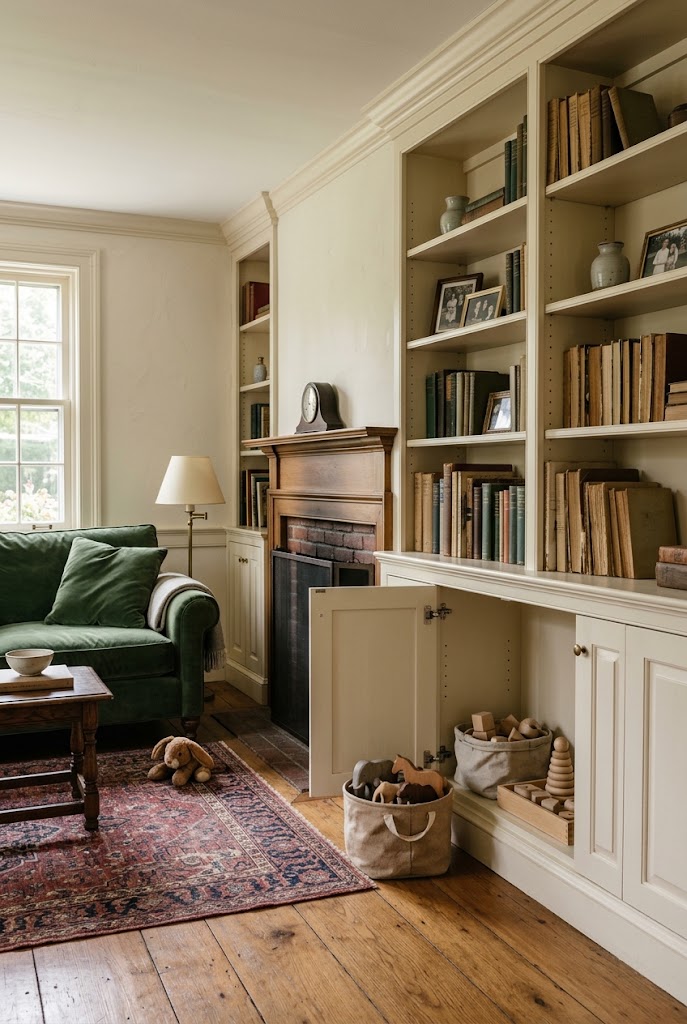
PHOTO 12 OF 49
Traditional low cupboards
Hide toys in the cupboards below bookshelves
Closed lower storage gives children a practical home for toys while keeping the upper shelving useful for books.
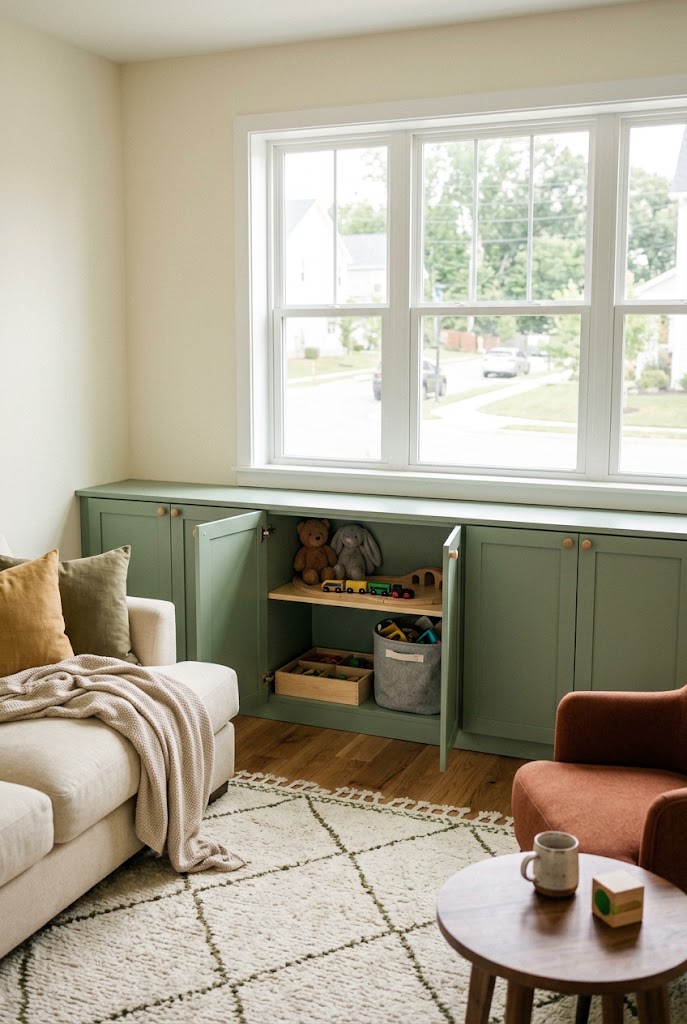
PHOTO 13 OF 49
Sage-green cabinets
Make painted cabinetry part of the living room
A subdued cabinet color can visually blend children's storage into a family room rather than making it feel like a separate playroom.
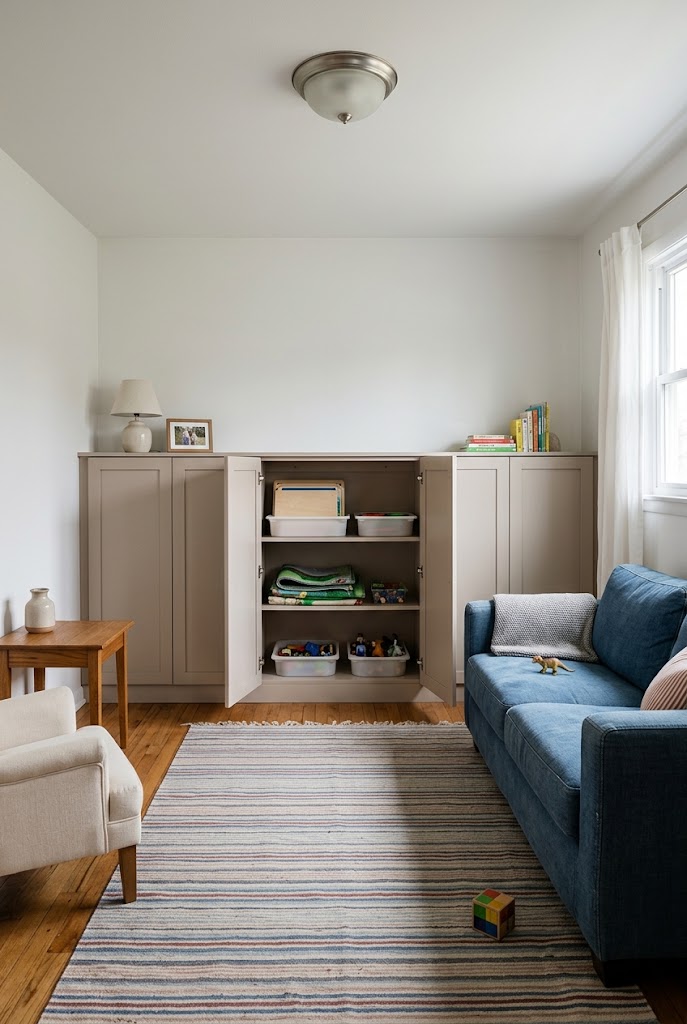
PHOTO 14 OF 49
Shallow storage wall
Choose shallow cabinets in a narrow room
Shallower storage preserves a walking path and still provides room for books, art supplies, and smaller toys.
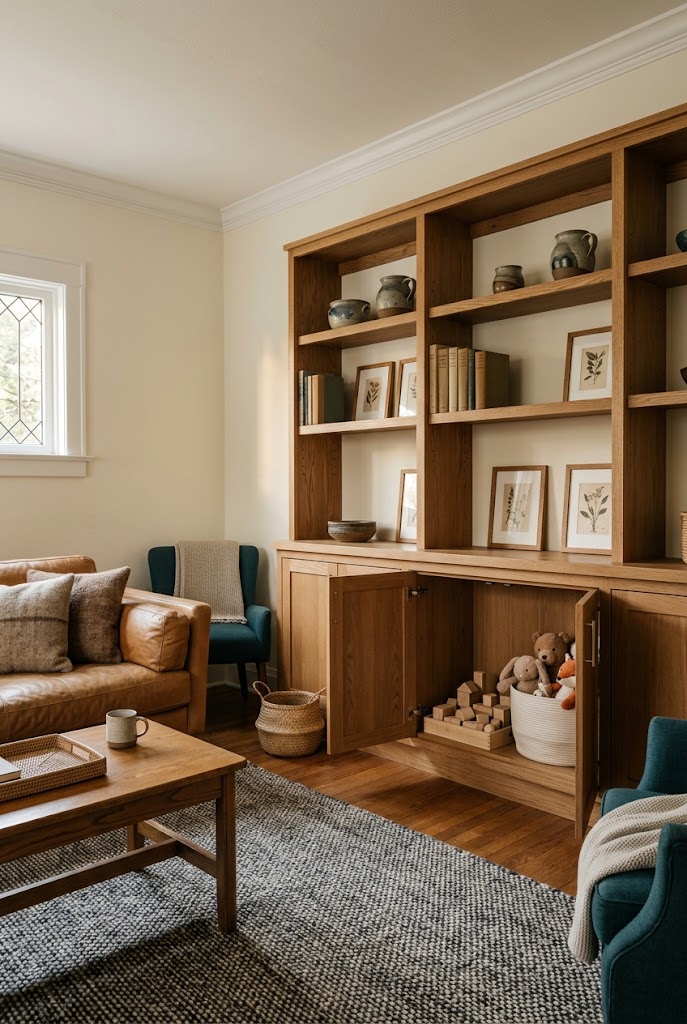
PHOTO 15 OF 49
Bookshelves with compartments
Mix display shelves with hidden toy compartments
Keep a few loved objects on open shelves and corral the messy sets behind the doors below.
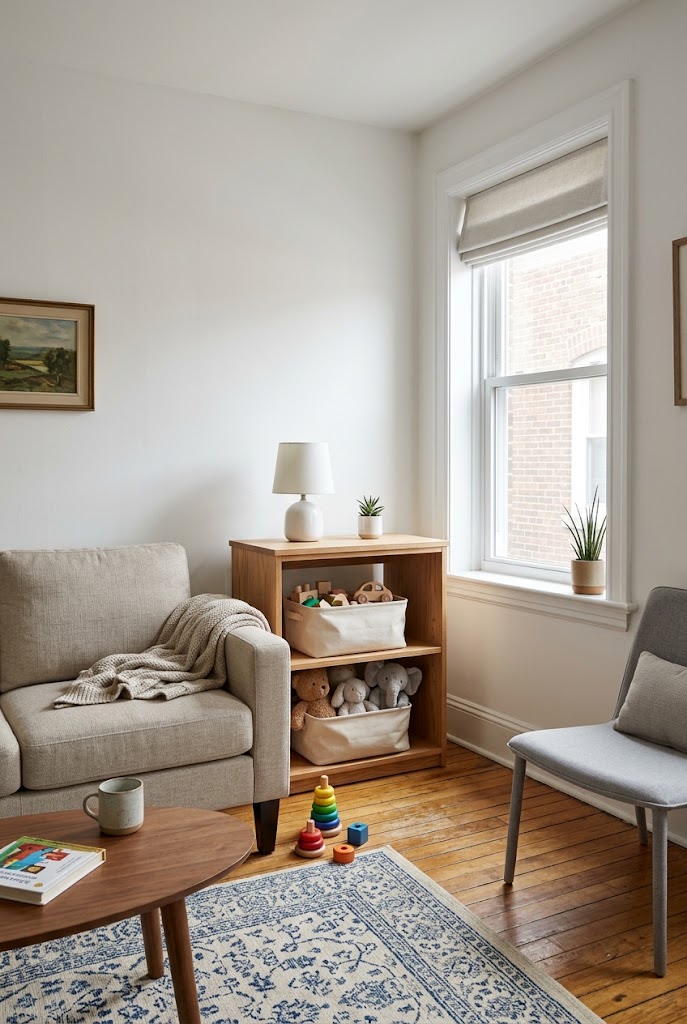
PHOTO 16 OF 49
Apartment sofa storage
Use the unused wall beside the sofa
A narrow, low unit in the gap between sofa and wall can hold baskets without requiring a dedicated playroom.
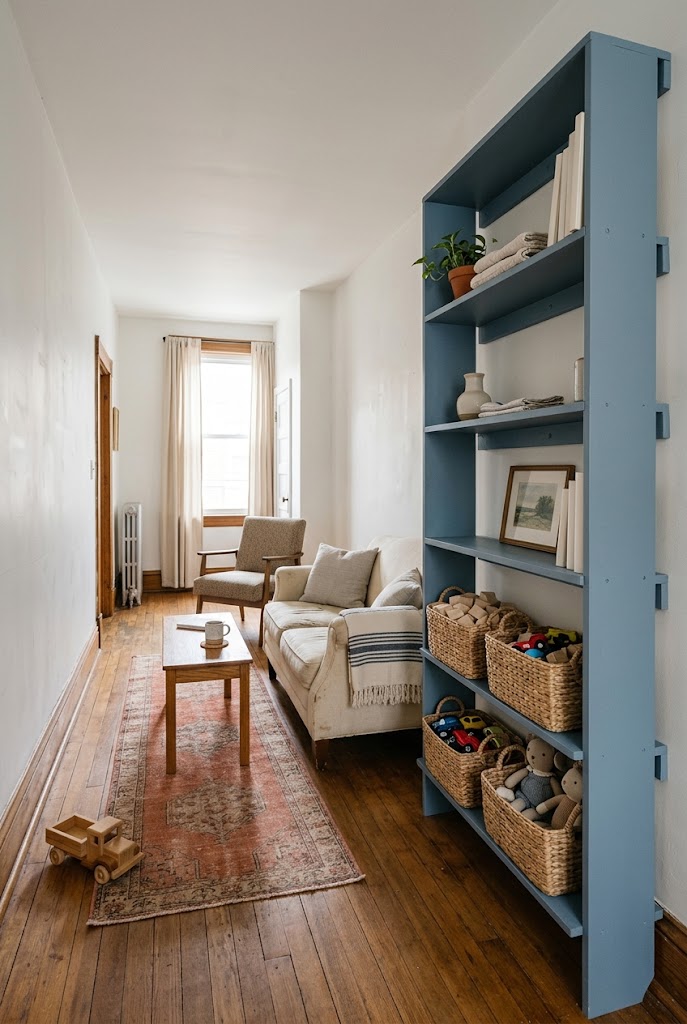
PHOTO 17 OF 49
Narrow room vertical shelves
Use height without crowding the floor
Secure tall storage to the wall and keep children's belongings in its lowest, easiest-to-reach compartments.
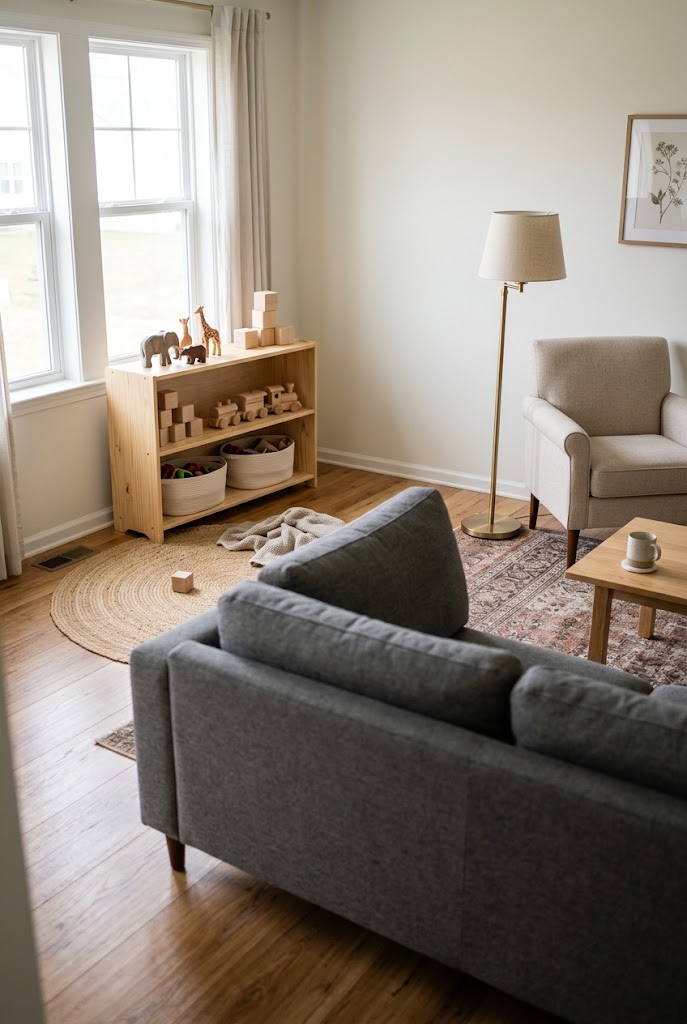
PHOTO 18 OF 49
Play corner behind sectional
Carve out a child-sized space behind the sofa
A low shelf and small rug can turn the back of a sectional into a defined play area with its own cleanup zone.
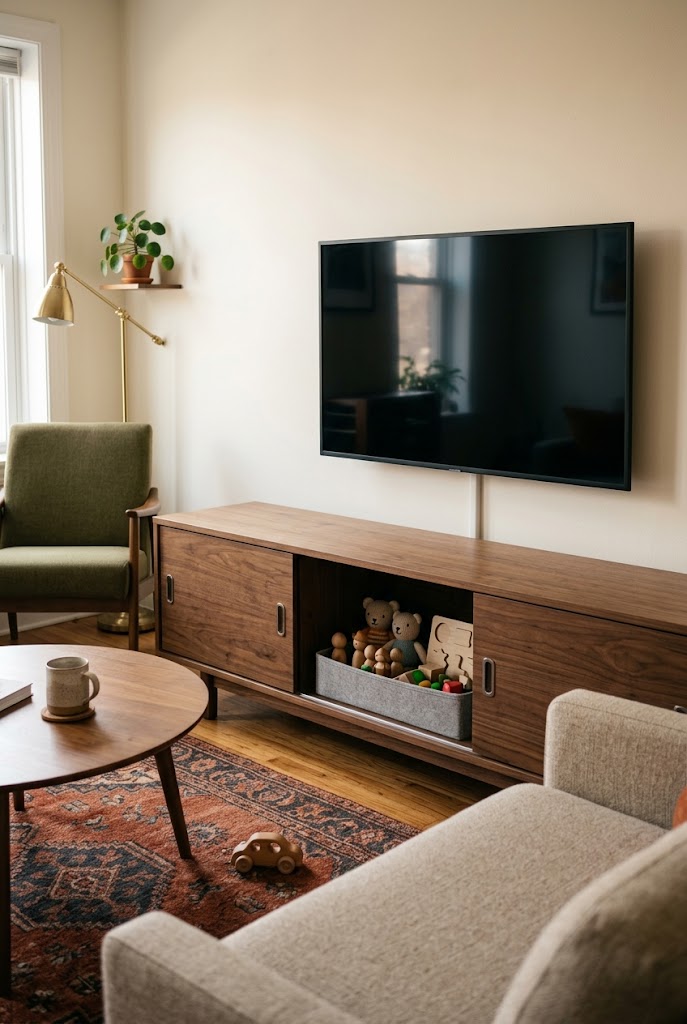
PHOTO 19 OF 49
Multifunctional media console
Give the media console a second job
Dedicate drawers away from electronics and cords to games and toys, with frequently used items near the bottom.
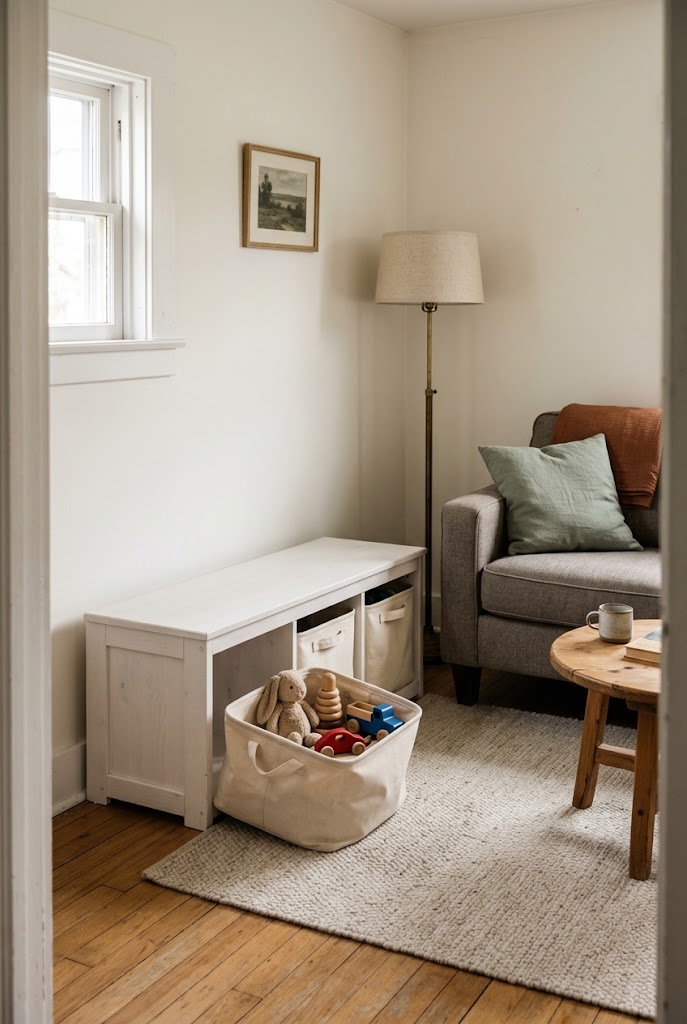
PHOTO 20 OF 49
Tiny minimalist family room
Edit the toys before buying more furniture
One compact storage unit and a small rotating selection of playthings can be more useful than extra shelving in a tiny space.
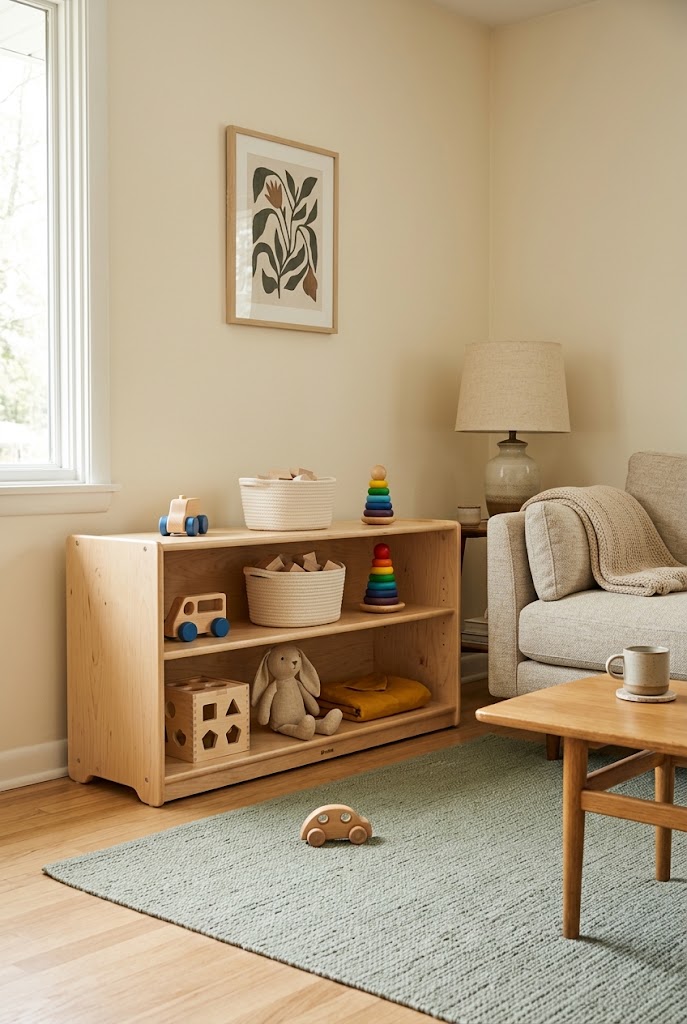
PHOTO 21 OF 49
Low Montessori-style shelf
Display just a few toys on low shelves
Use a stable low shelf with an uncluttered selection so children can see and return their own toys.
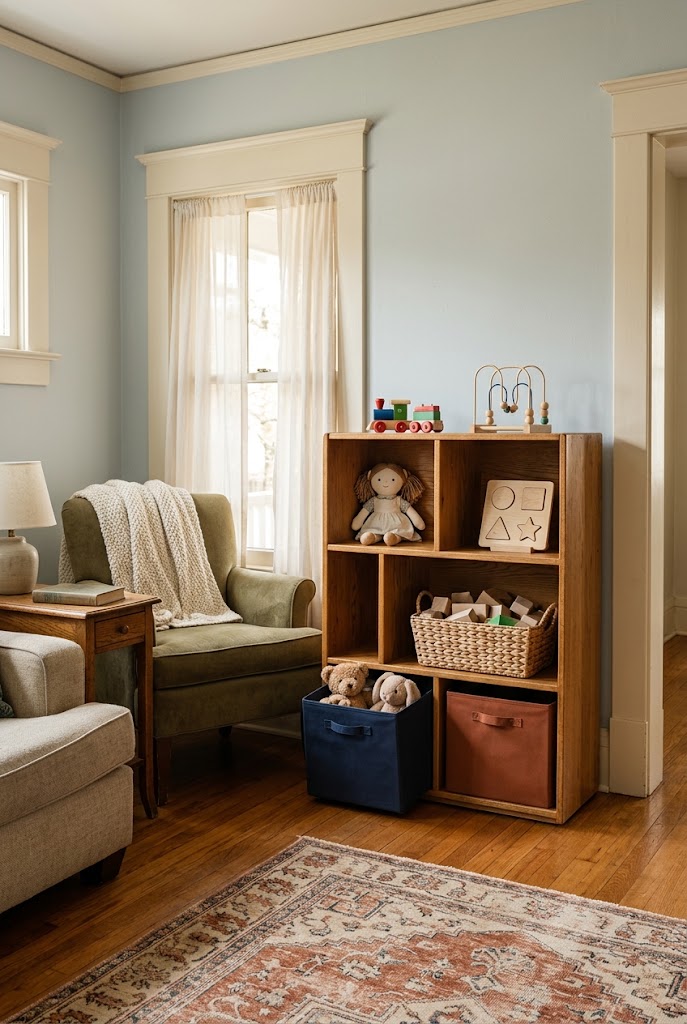
PHOTO 22 OF 49
Toy-rotation shelf
Rotate toys instead of storing them all in sight
Keep a manageable number of activities accessible and place the rest in closed storage for later rotation.
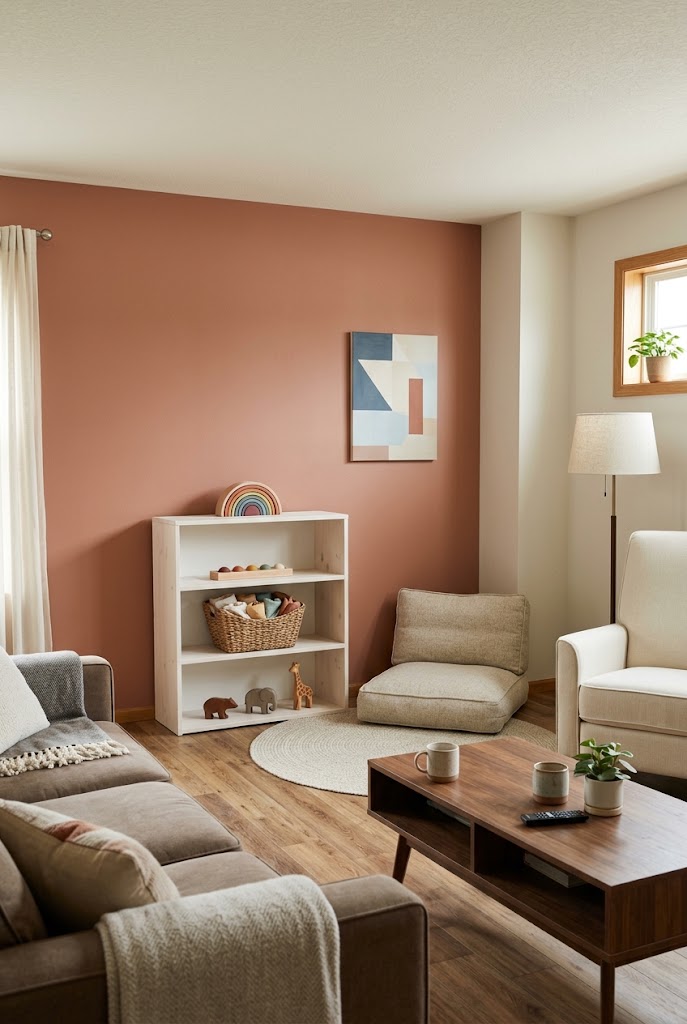
PHOTO 23 OF 49
Natural play corner
Bring toy storage into a cozy play corner
Keep toys together in a low, defined spot using natural baskets and simple shelving that blends into the family living room.
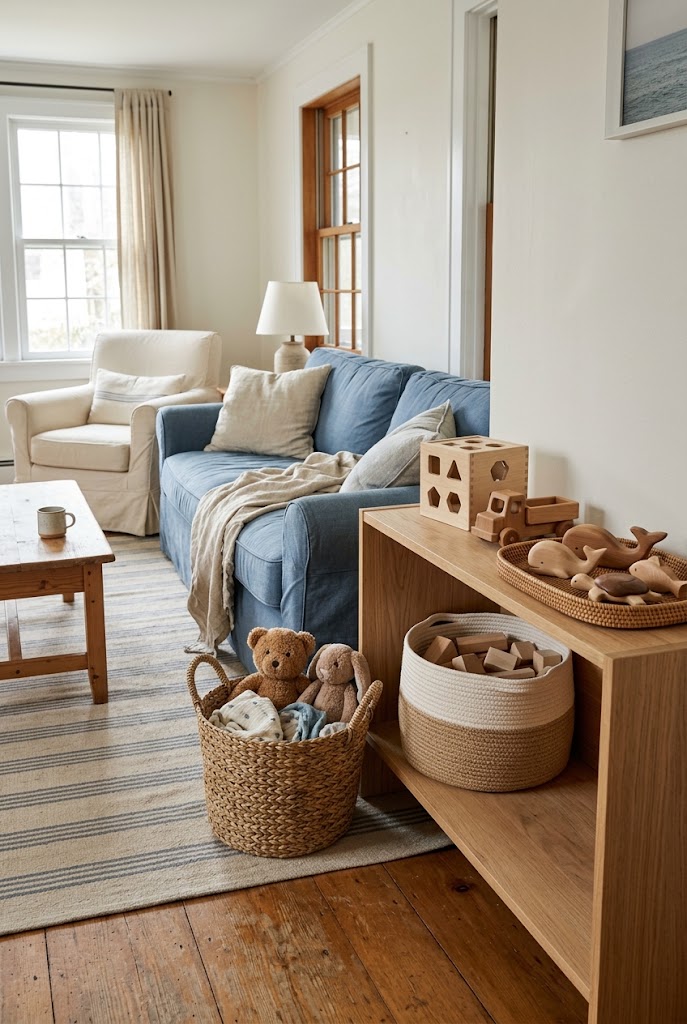
PHOTO 24 OF 49
Natural-material storage
Mix wooden toys with natural baskets
Simple wood and woven storage can make kid-friendly spaces feel connected to the rest of a warm family room.
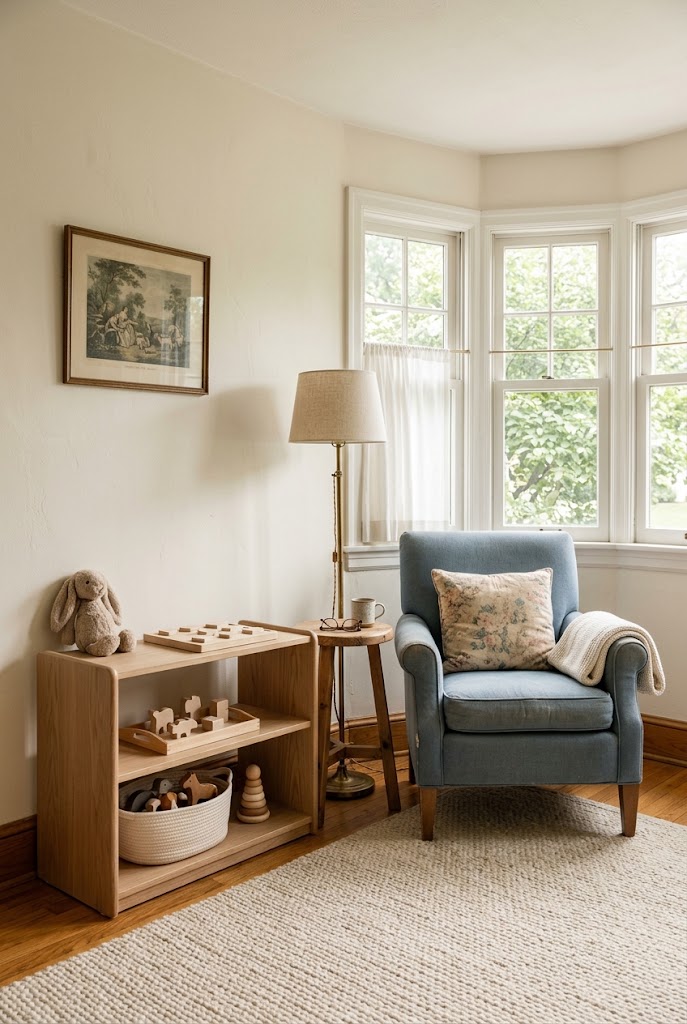
PHOTO 25 OF 49
Shelf by reading chair
Keep favorite toys within easy reach
A small shelf beside an adult reading chair makes it easier to supervise independent play while sharing the room.
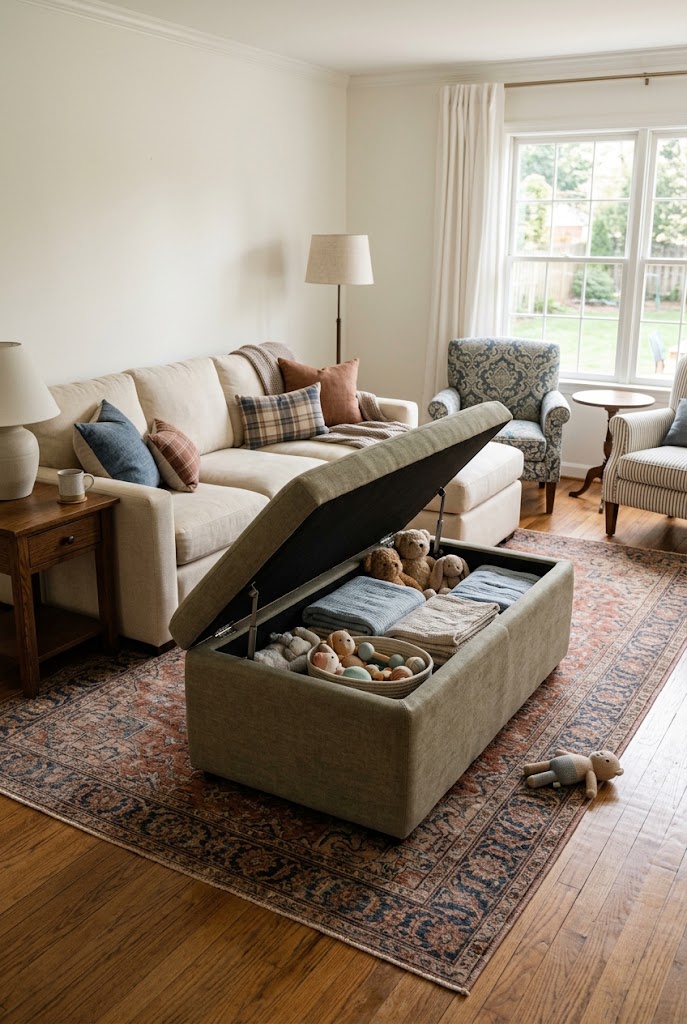
PHOTO 26 OF 49
Upholstered storage ottoman
Swap an ordinary ottoman for concealed storage
A lift-top ottoman offers a place for lightweight toys; choose a child-safe lid mechanism that cannot slam shut.
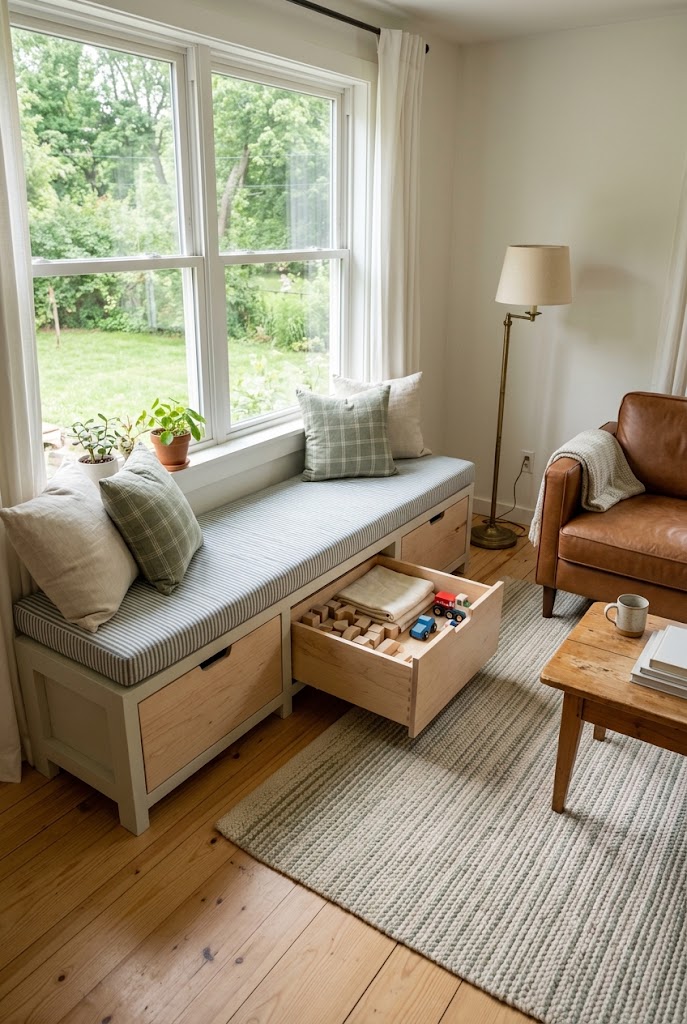
PHOTO 27 OF 49
Pull-out window drawers
Use drawers under a bench for everyday toys
Pull-out compartments are useful for toys that stack neatly, especially when the drawers have child-safe stops.
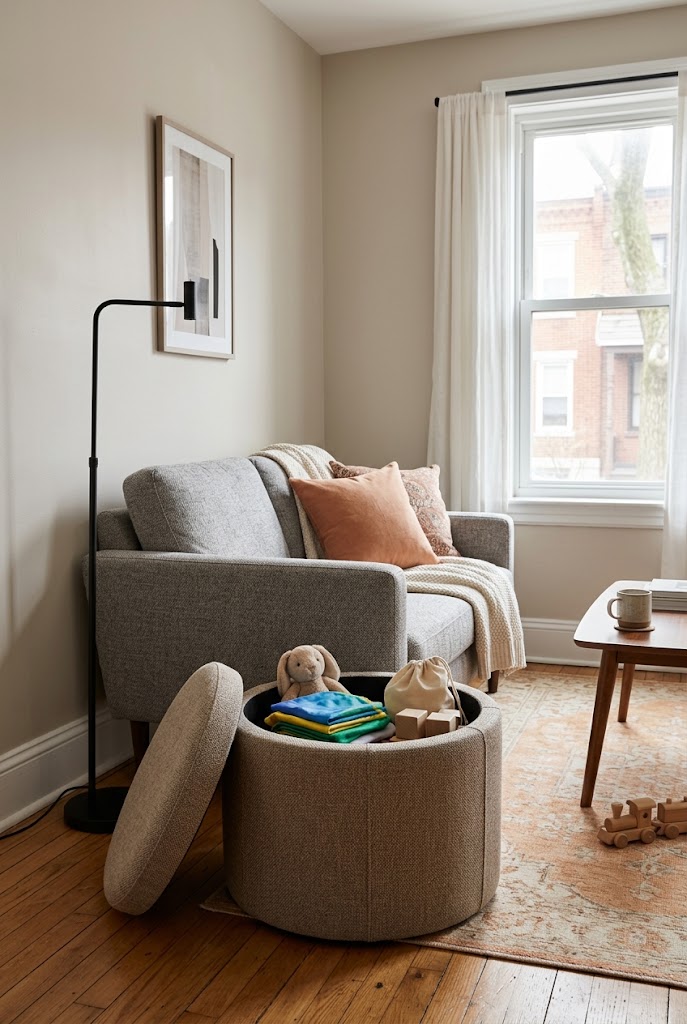
PHOTO 28 OF 49
Round storage ottoman
Add a compact round storage seat
A small upholstered storage ottoman can tuck beside an armchair and hold soft toys or small games.
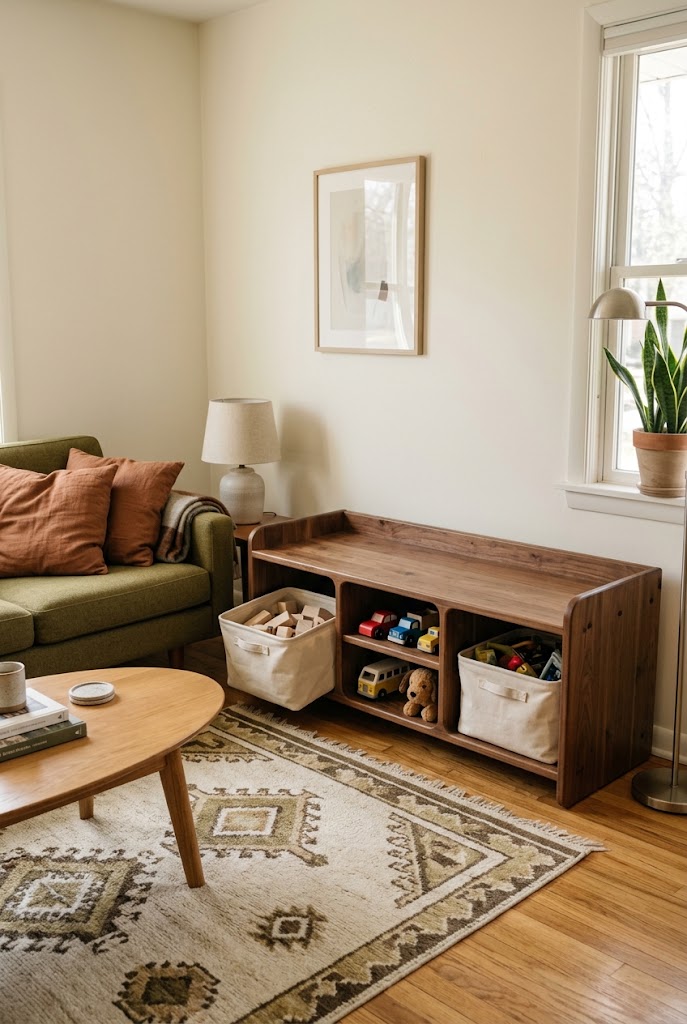
PHOTO 29 OF 49
Low toy-storage bench
Use a bench with baskets underneath
Open baskets beneath a sturdy low bench make it easy for children to take toys out and put them back.
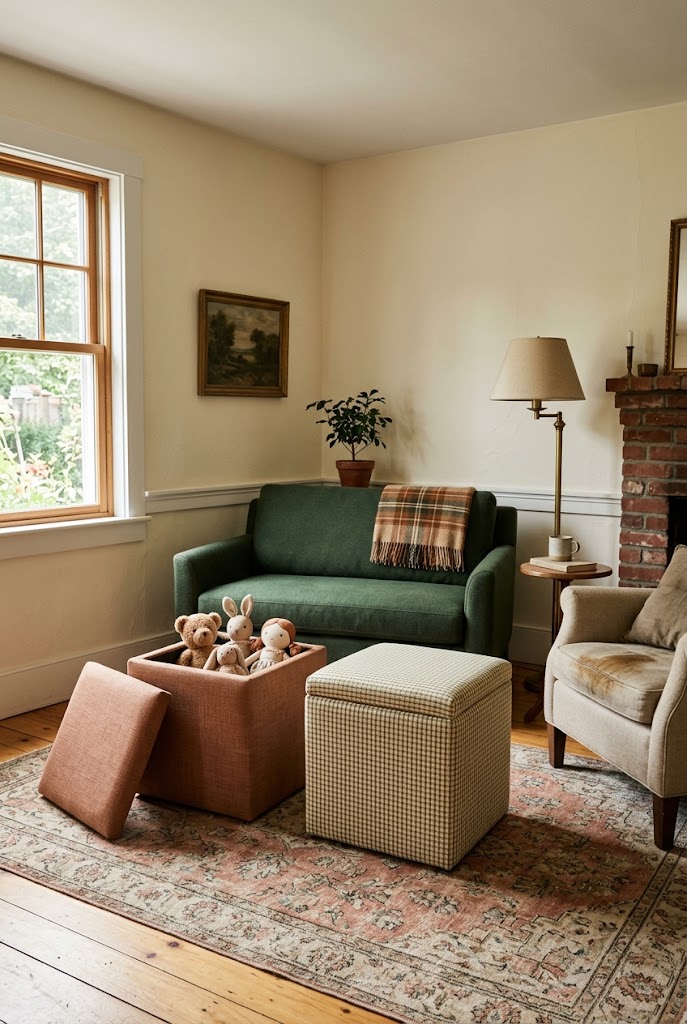
PHOTO 30 OF 49
Two storage ottomans
Split toys between two matching storage seats
A pair of compact ottomans can hold separate toy categories and move easily for different room layouts.
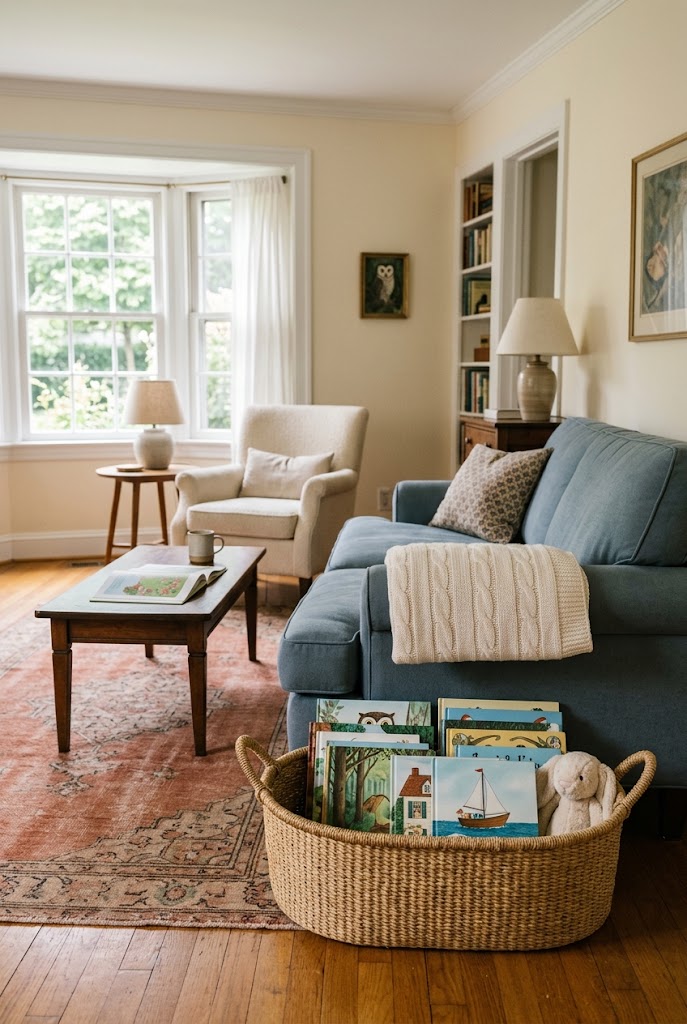
PHOTO 31 OF 49
Books beside the sofa
Place children's books in one easy-access basket
A short, stable basket near family seating invites reading without needing a full-size bookcase.
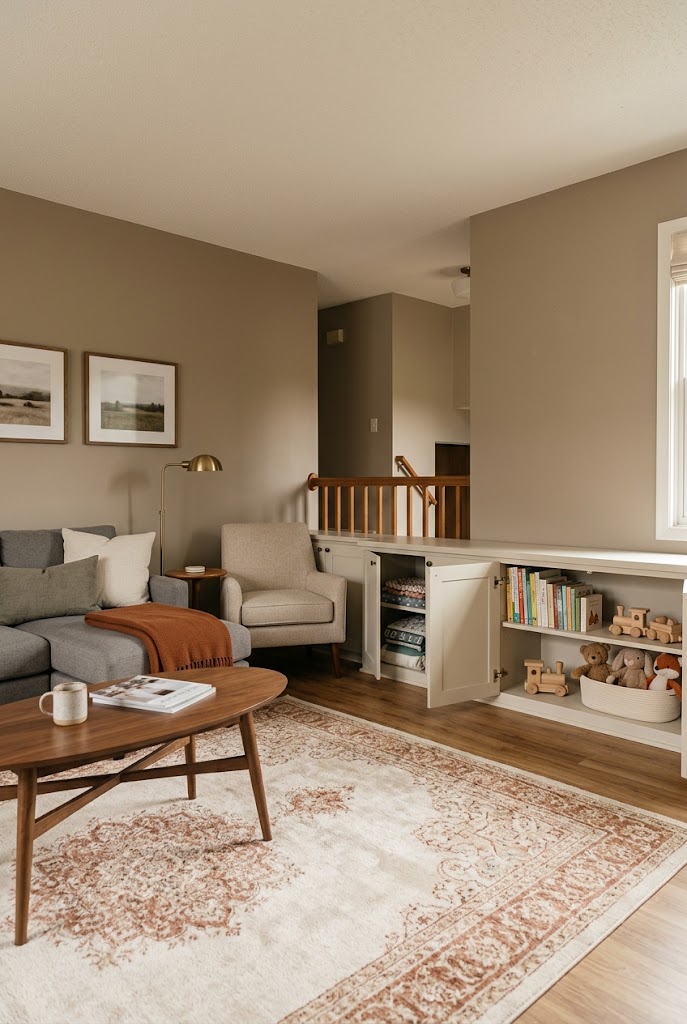
PHOTO 32 OF 49
Low bookshelf in cabinetry
Give children's books the lowest shelves
Kids can select and return their own books when the family bookcase reserves the bottom row for them.
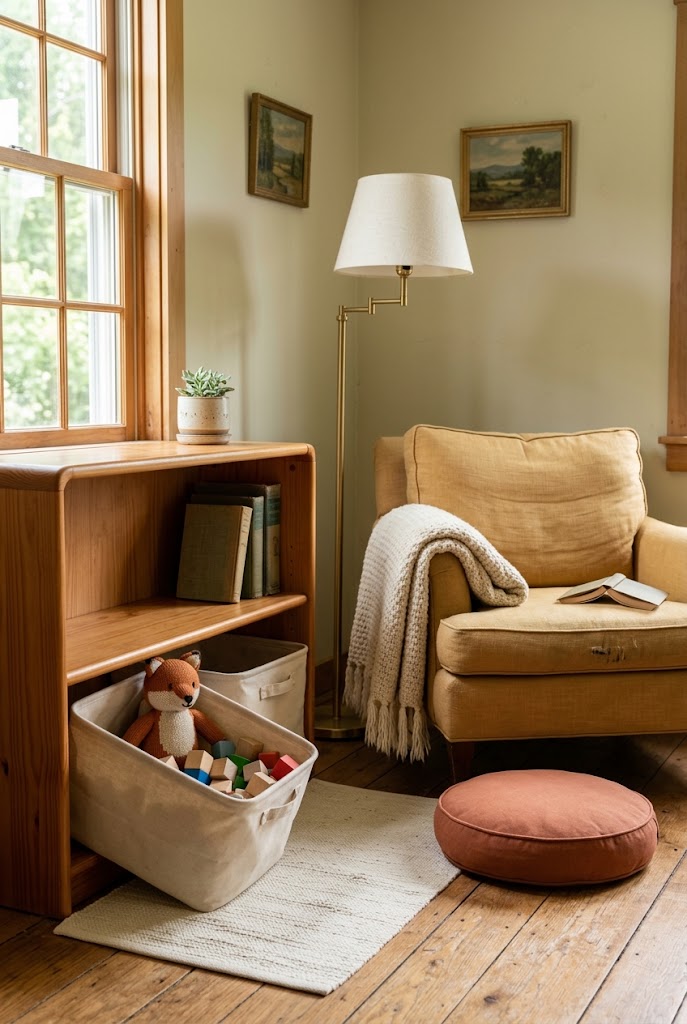
PHOTO 33 OF 49
Cozy reading corner
Build a reading nook with nearby book storage
Use a soft chair or floor cushion and a reachable book basket so reading materials have an obvious place to go.
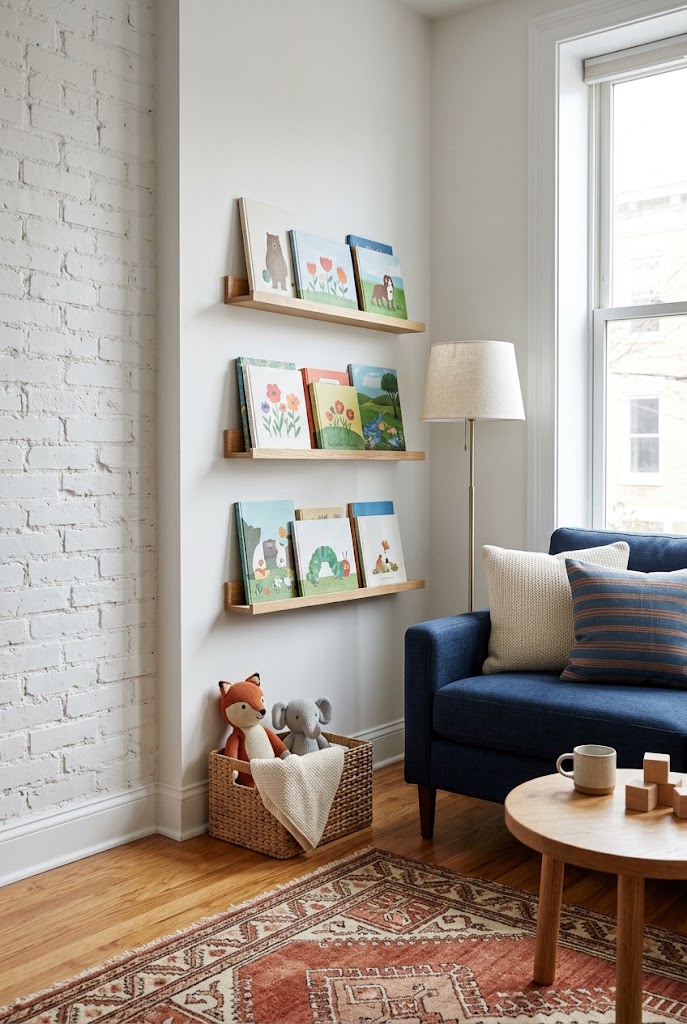
PHOTO 34 OF 49
Picture-book ledges
Show a few illustrated covers on shallow ledges
A small number of wall-mounted ledges can display book covers; mount them securely where children can reach safely.
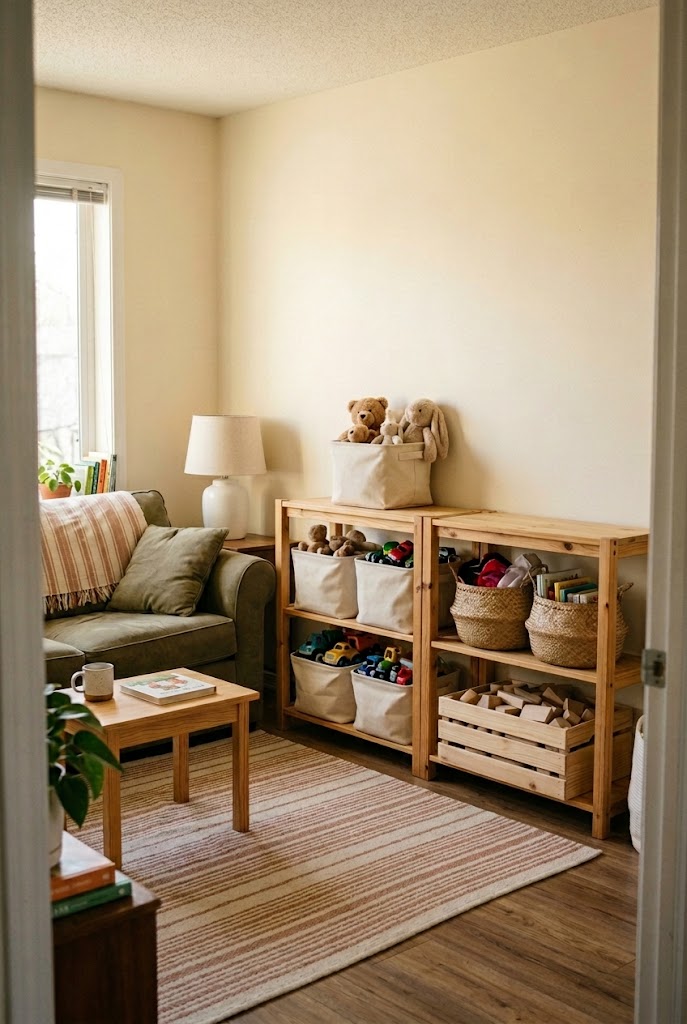
PHOTO 35 OF 49
Open toy shelves
Keep favorite toys visible on open shelves
Simple wooden shelves with open containers let children see what is available, choose toys independently, and play with more of their toys instead of forgetting what they have.
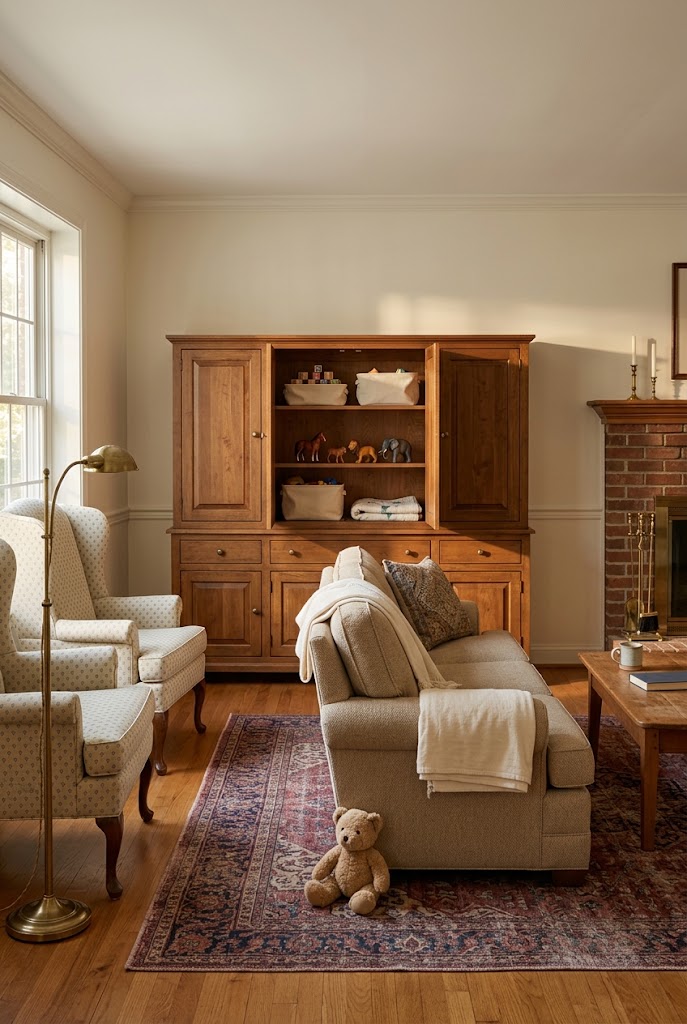
PHOTO 36 OF 49
Traditional family room
Hide toys inside a classic sideboard
A traditional sideboard can hold family games and smaller toys while fitting the style of a shared living room.
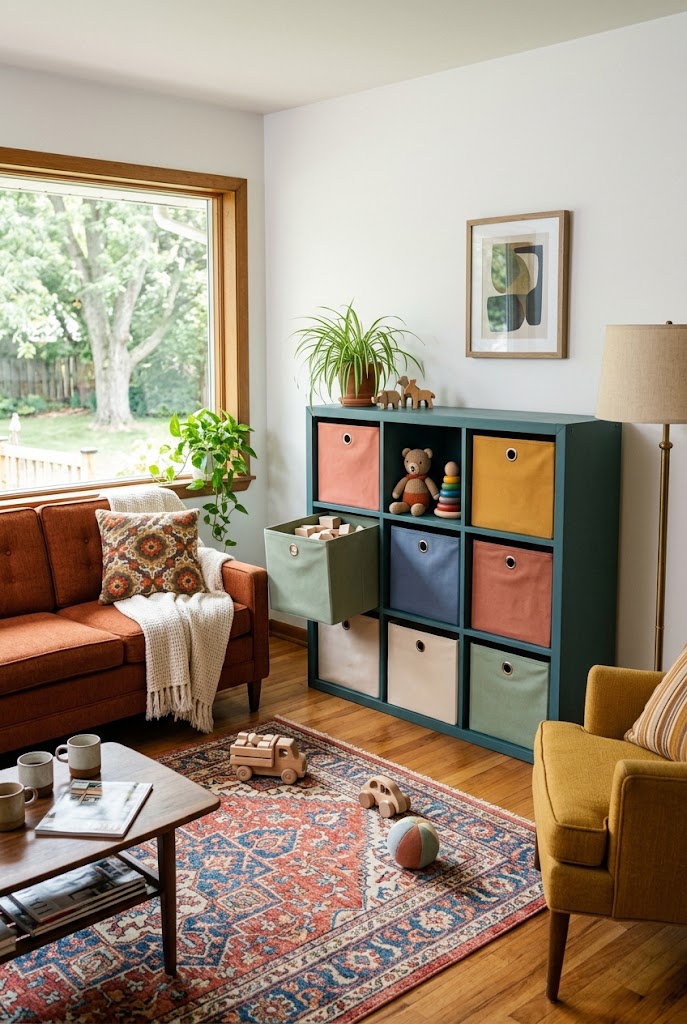
PHOTO 37 OF 49
Colorful eclectic storage
Let a few colorful bins belong in the room
Choose cheerful but coordinated containers instead of hiding every sign of family life.
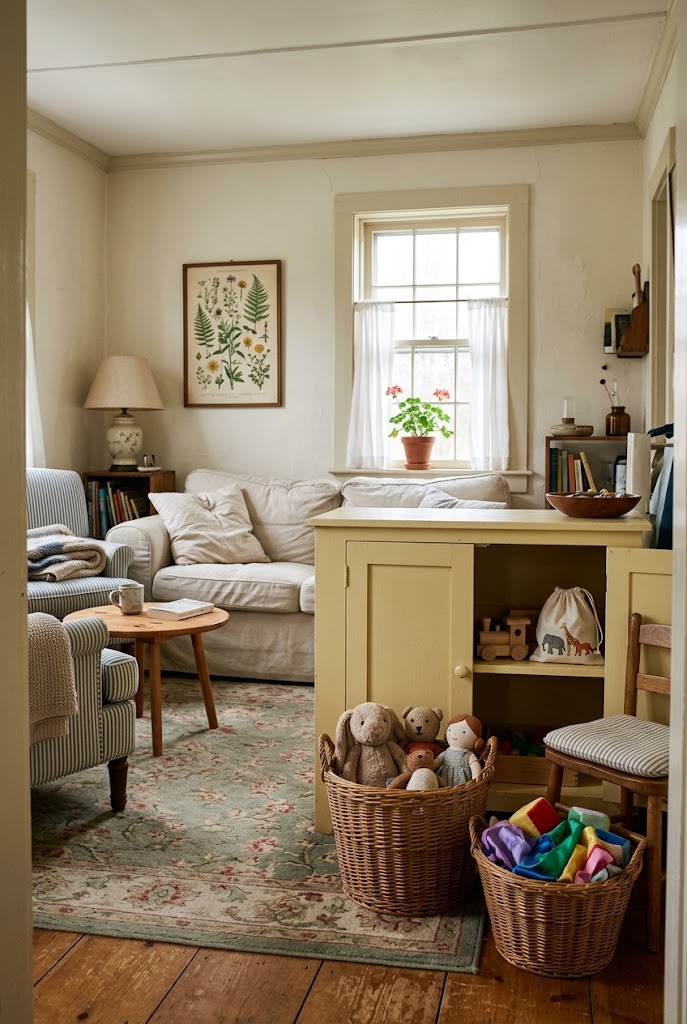
PHOTO 38 OF 49
Cottage basket storage
Use cottage-style baskets with sturdy shelving
A combination of woven baskets and painted wood makes toy storage feel like part of a relaxed, lived-in room.
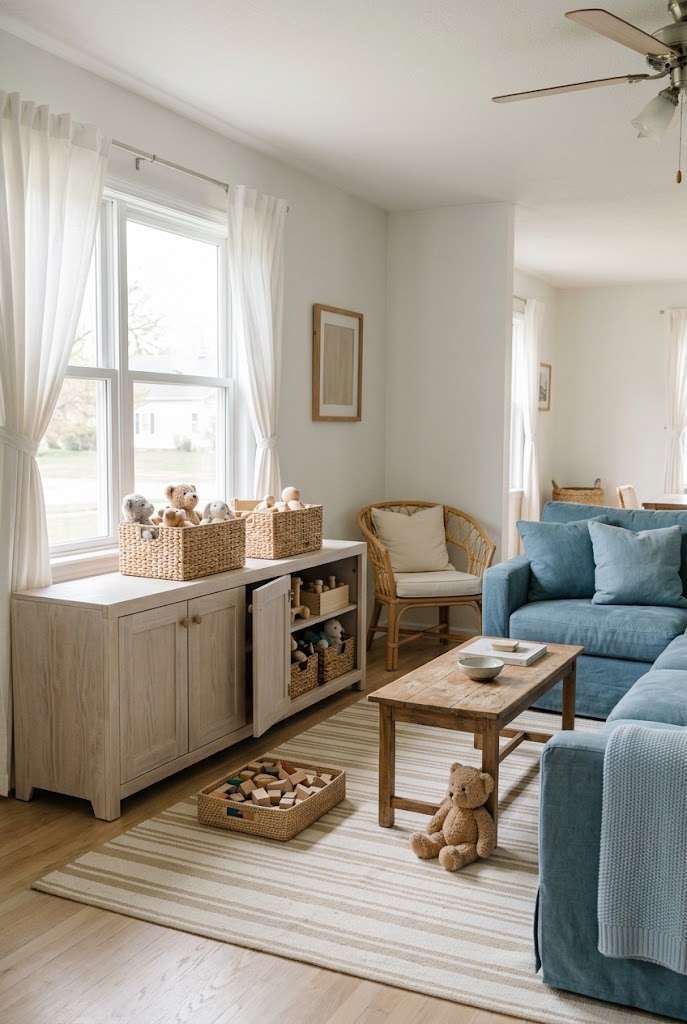
PHOTO 39 OF 49
Coastal toy-storage zone
Pair light-colored cabinets with woven storage
Closed cupboards and natural baskets balance easy cleanup with an airy coastal living room look.
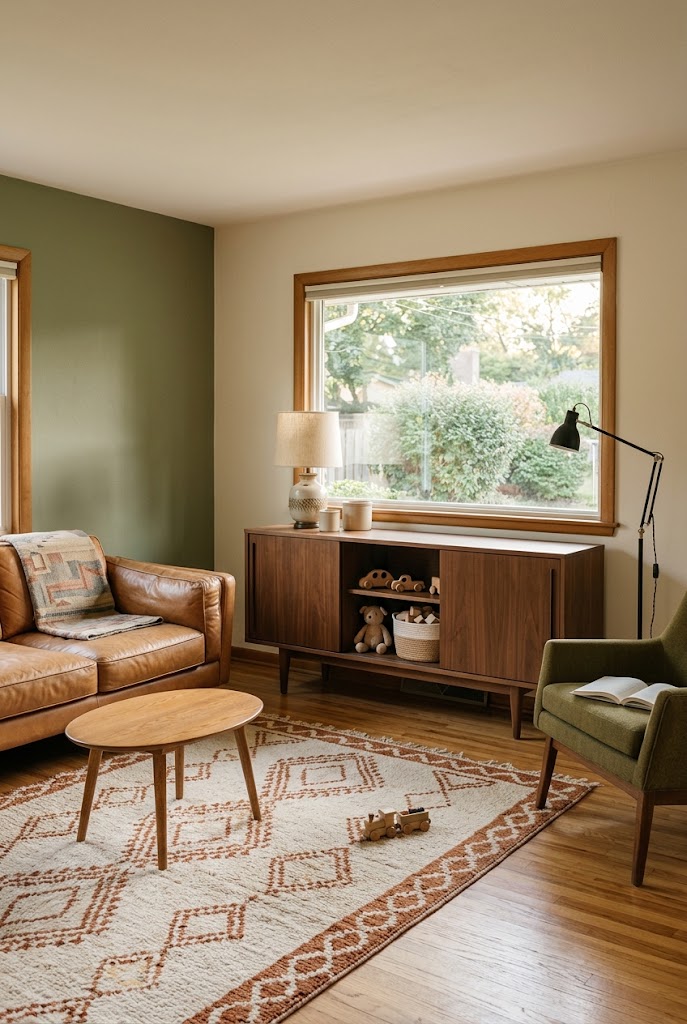
PHOTO 40 OF 49
Mid-century toy cabinet
Choose low storage with clean mid-century lines
A low cabinet with practical compartments can blend toy storage into a room centered on adult furniture.
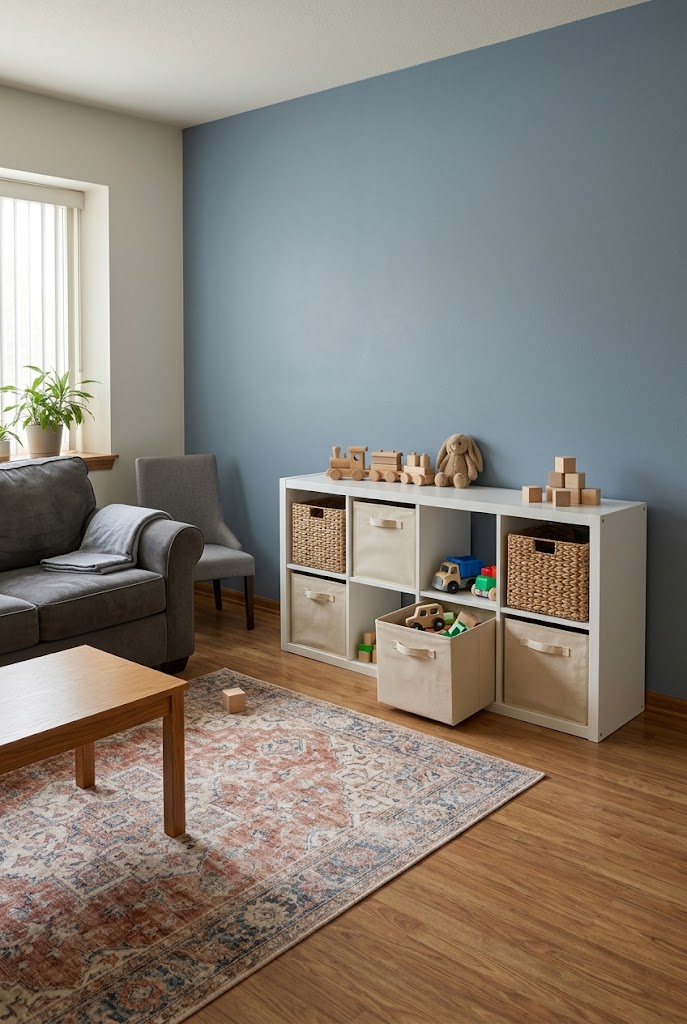
PHOTO 41 OF 49
Basic cube organizer
Make an inexpensive cube organizer work harder
Use a securely anchored unit with a mix of open spaces and baskets, rather than filling every cube with tiny bins.
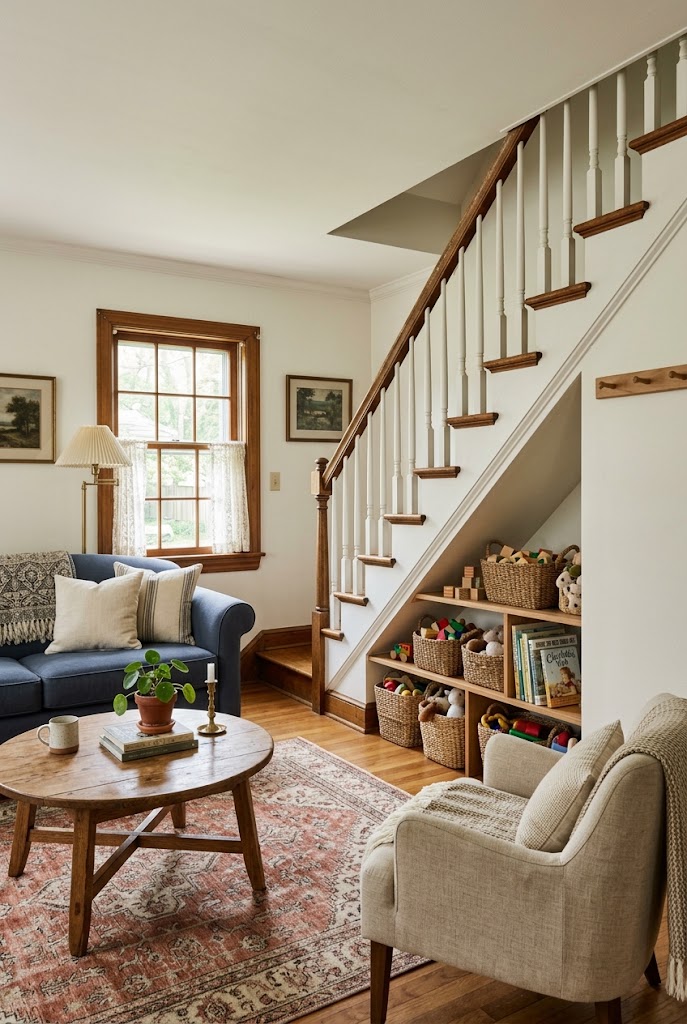
PHOTO 42 OF 49
Under-stairs toy nook
Make use of space beneath the stairs
A small under-stairs nook can keep toys close to the living room without taking up the main floor area.
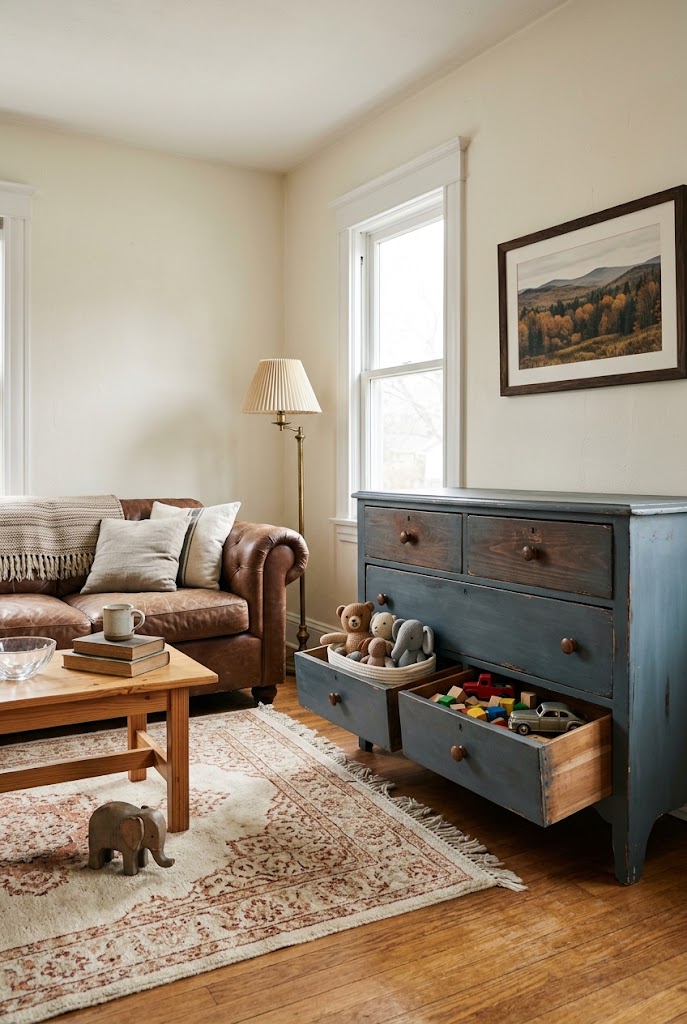
PHOTO 43 OF 49
Vintage dresser storage
Repurpose a dresser for toy collections
A well-maintained dresser can contain puzzles and pretend-play items; anchor it securely and check drawer safety.
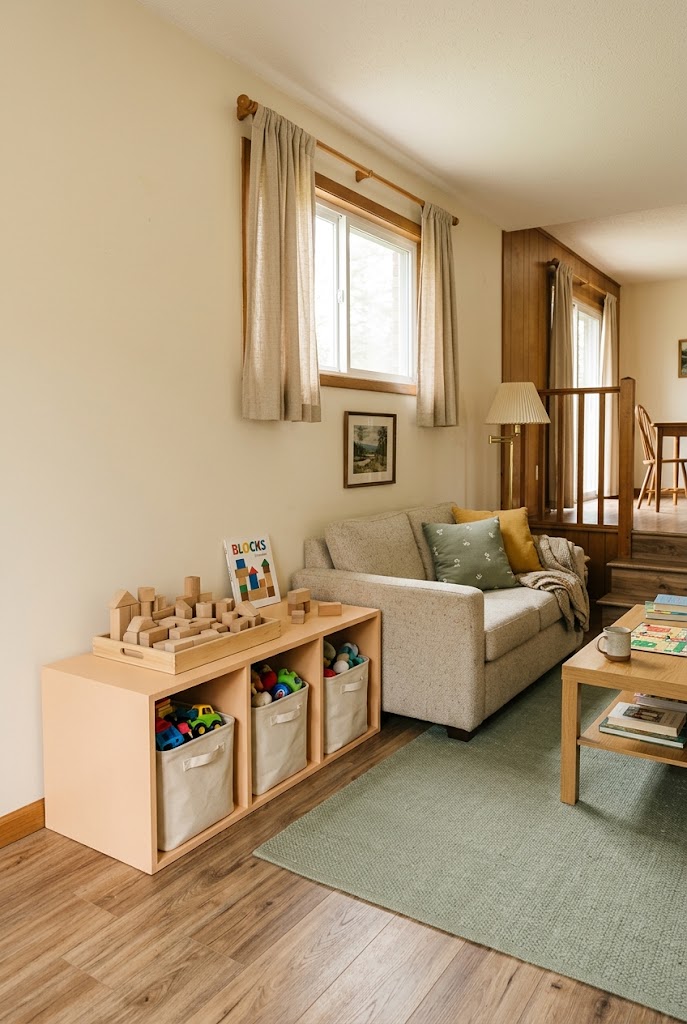
PHOTO 44 OF 49
DIY painted bench
Refresh a basic bench for toy storage
A painted bench with accessible bins below can be a useful budget project without building custom cabinets.
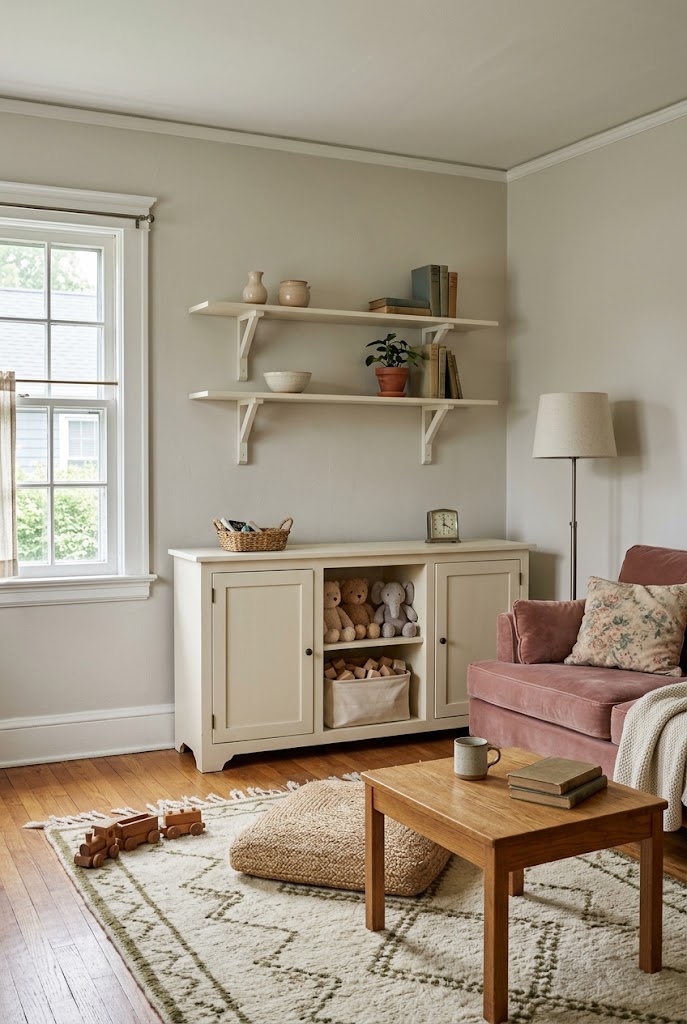
PHOTO 45 OF 49
Simple shelf and baskets
Use low toy bins beneath higher wall shelves
Place accessible toy storage at child height while reserving safely mounted high shelves for adult-only items.
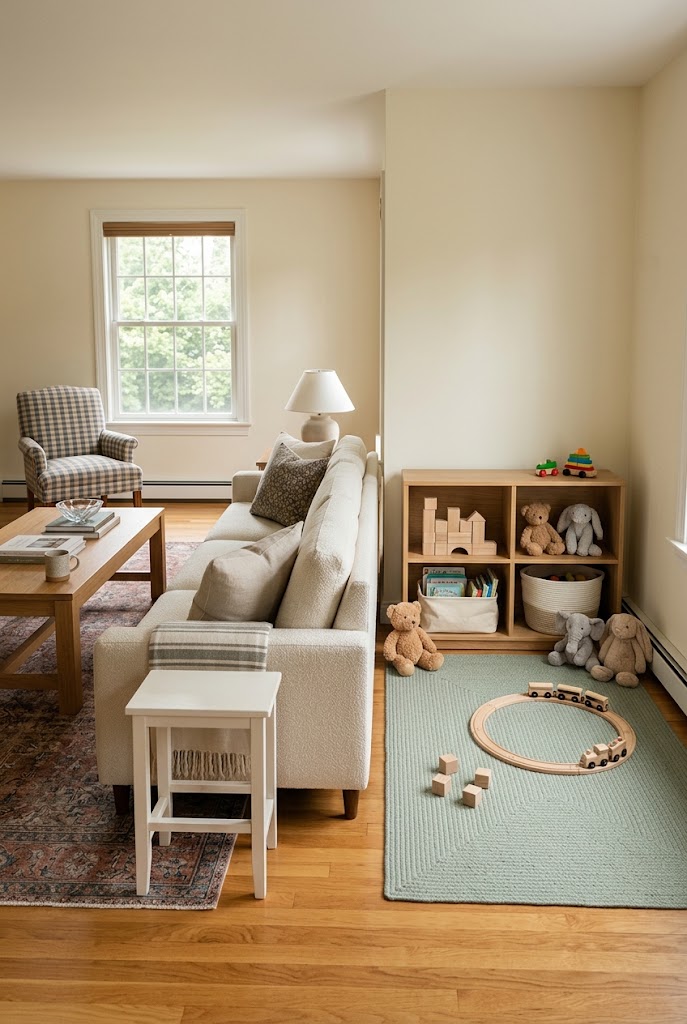
PHOTO 46 OF 49
Defined play corner
Give the living room one clear play boundary
A rug, one low shelf, and a basket make a predictable home for play without needing a whole new room.
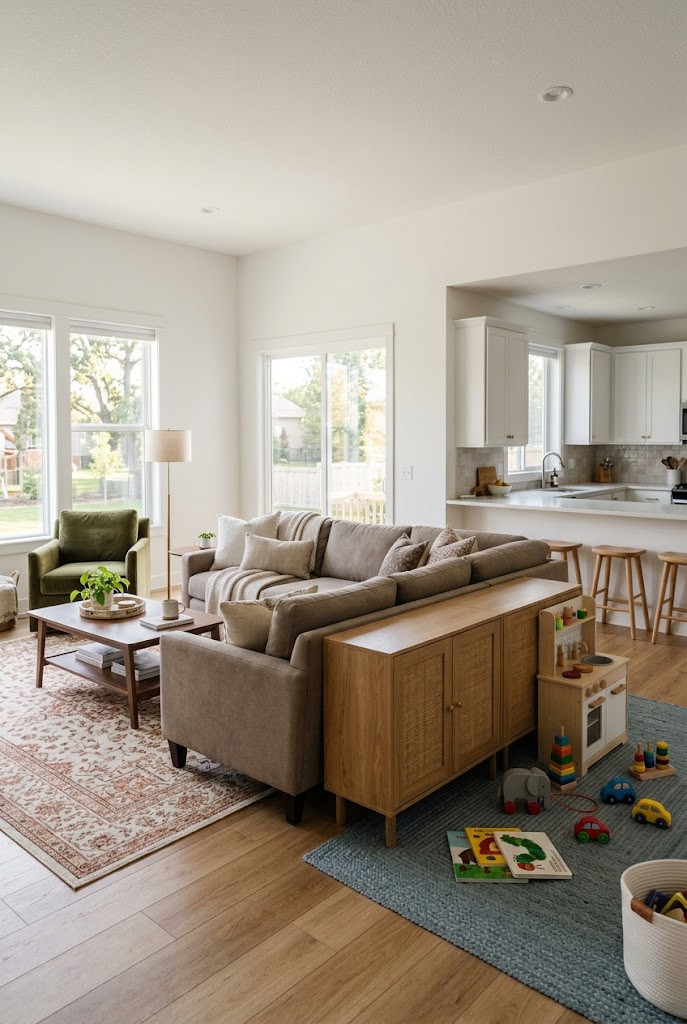
PHOTO 47 OF 49
Open-concept toy zone
Keep playthings near the main family gathering space
Locate a low storage unit along one edge of the open-plan room so toys stay close without blocking traffic.
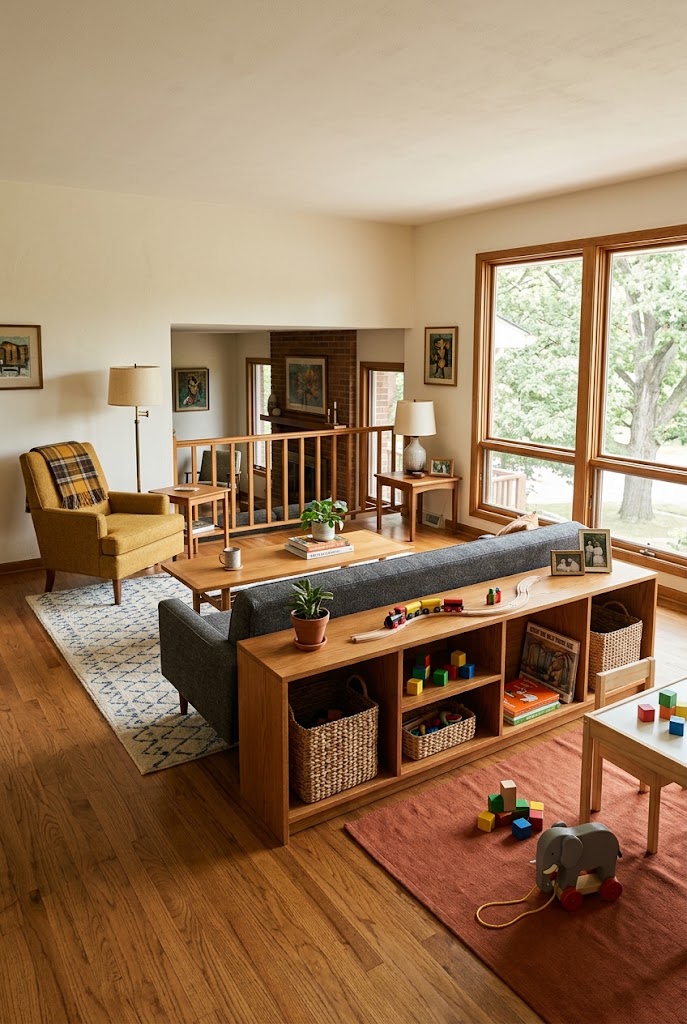
PHOTO 48 OF 49
Behind-sofa storage
Use the back of the sofa as a natural divider
A stable low shelf behind the sofa can create a play boundary when it leaves a clear walking path.
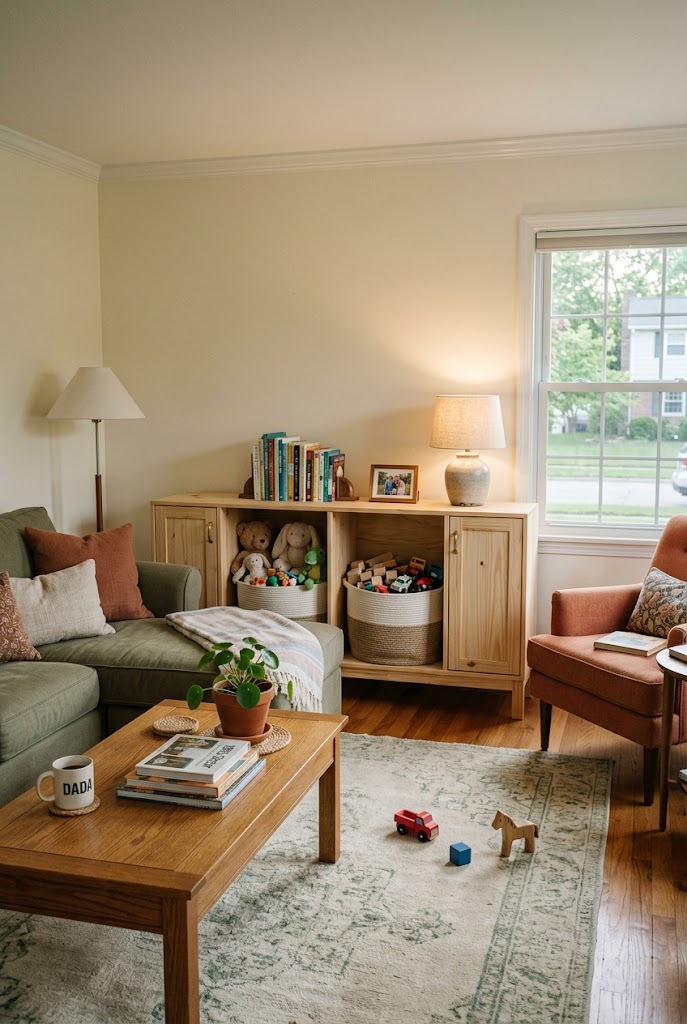
PHOTO 49 OF 49
Five-minute toy reset
Make every toy's storage place obvious
Choose broad categories, low containers, and a quick family reset so tidying takes less instruction.
Start with one toy storage zone
Pick the toys that are used most often, give them a home your child can reach, and leave enough room to put everything away without rearranging the room.
Want a simple follow-through plan? Make a free family routine chart →
These images are AI-generated design concepts, not photographs of actual homes or listings for particular products. Check furniture dimensions and child-safety features before recreating a storage idea.