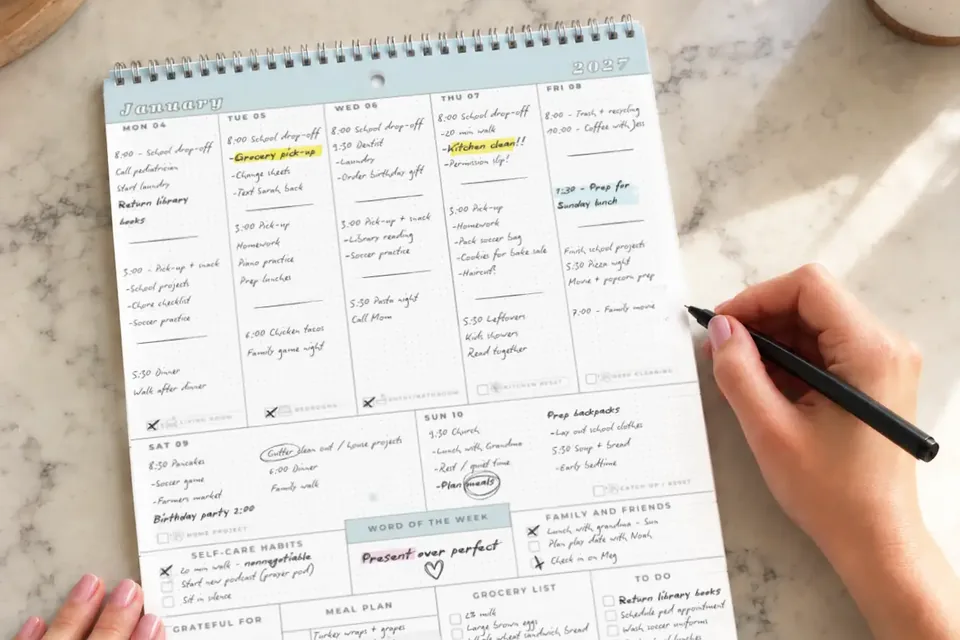

Tuesday night, someone asks who’s driving to practice tomorrow. You know, because the whole week lives in your head.
put the week where everyone can check it, review it together, and agree on who owns rides, dinners and extra jobs. Use Sunday or another regular time that fits.
The Real-Life Version
How to organize your family’s week
Four pieces. Start with the first and add one a week.
1. One calendar everyone can read
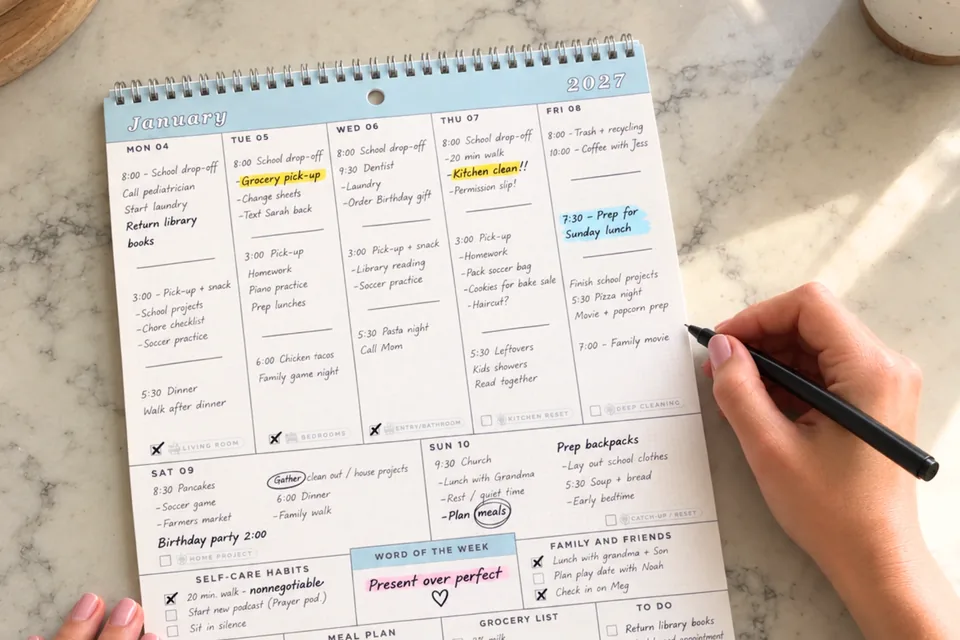
Choose a shared reference: a paper calendar where everyone passes, or a digital one the adults can access. Write every entry the same way: time, what, who, what to bring. Here’s how to set up a family calendar that actually gets read. Still choosing a format? Compare paper with a phone calendar or paper with a digital wall display, or see whether a Skylight is worth it. Not sure you need a week view? See weekly vs. monthly wall calendars. Ready to buy one? Here are the best family wall calendars for 2027, by family type.
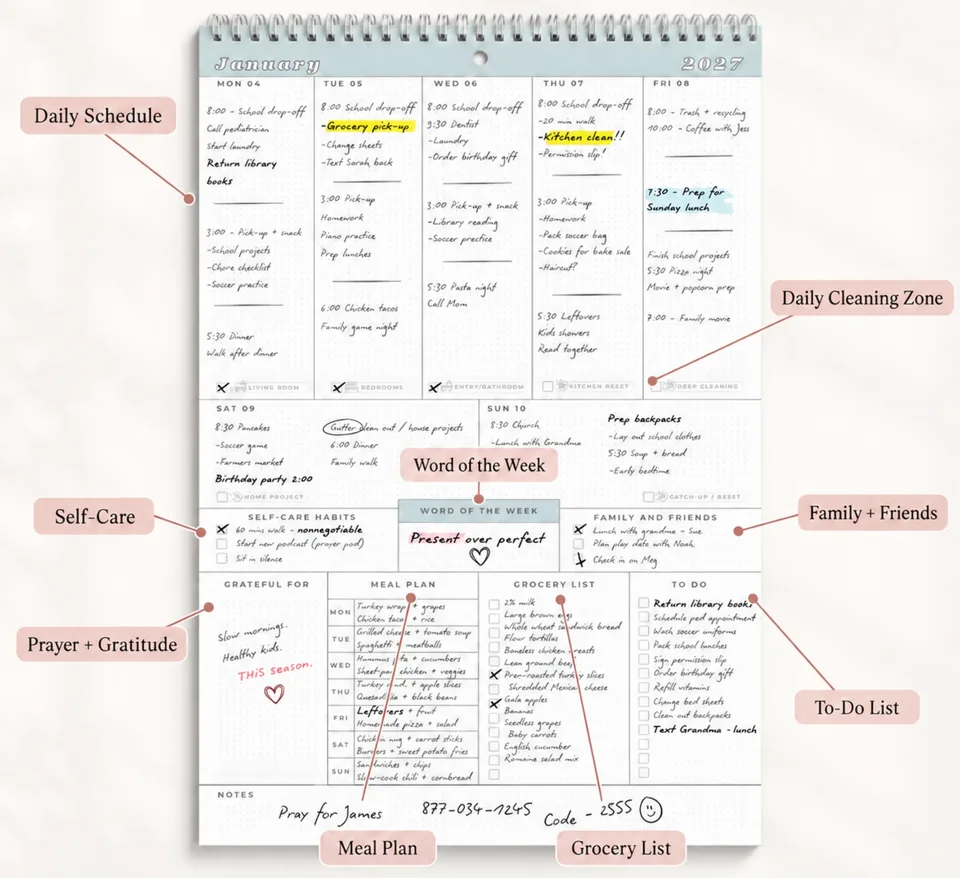
2. One spot for the week
Hang the calendar by the fridge or the door you leave by, with a pen, a clip for forms and flyers coming in, and the grocery list. Start small: here’s how to set up that spot without covering a wall in organizers. If the spot stops helping, find where the week is leaking and reset it.
3. A 15-minute weekly reset
Choose a regular time with the people who share household work. Follow the 15-minute weekly family reset, then stop when the timer goes off:
Sunday
Weekly reset
5 steps · about 15 min
Done. The week is decided.
That last line is where making room for what matters starts.
4. Dinners decided once
Choose four or five dinners together. Agree on who takes each meal and who owns groceries, including checking supplies and shopping. The 20-minute meal planning method walks through it.
Turn those dinners into one grocery list with quantities, so the person shopping has the details.
Practice looking at tomorrow together. Each person checks the parts they own; younger children can learn with an adult.
The house works the same way: 15 minutes a day and one small cleaning zone, written on the same calendar.
Share the planning, not just the chores
- Pick one recurring job together. School pickups, groceries or a dinner night are clear places to start. Include noticing changes and making arrangements.
- Review the information once. Show where messages, dates and supplies live. The person taking the job sets their own reminders.
- Bring updates to the family check-in. Each owner reports what affects the week. Children can bring their school needs and check tomorrow with an adult while they learn.
When Life Happens
When the week falls apart
Missed Sunday? Plan Monday night, three days only. The rest can wait for next Sunday.
Chaotic week? Keep two pieces: the calendar and zero-night dinners. Skip everything else.
Starting from nothing? Just the calendar this week. Add the Sunday reset next week, dinners the week after.
Make it part of your week
- A morning routine chart your child can check: the steps and departure time for school mornings in one place.
- A launch pad by the door: a home for bags, shoes and anything that needs to go.
- Free weekly family planner printable: fill in the week on screen in 10 minutes and print it.
Your Next Small Win
At your next check-in, agree on the owner of one pickup or dinner. Write the name beside it, including any preparation.