Dinner’s done, plates are still on the table, and you’re asking again: “Can someone help?” Most kids can do more than they’re handed. They need a job that fits their age, a clear finish line and somewhere to check it that isn’t your voice.
Toddlers can put toys and clothes where they go, preschoolers can finish small jobs like clearing their plate, 6–8-year-olds can own a short routine, and 9–12-year-olds can take on real household jobs like laundry and trash. Pick three, teach them, and put them on a chart your child checks themselves.
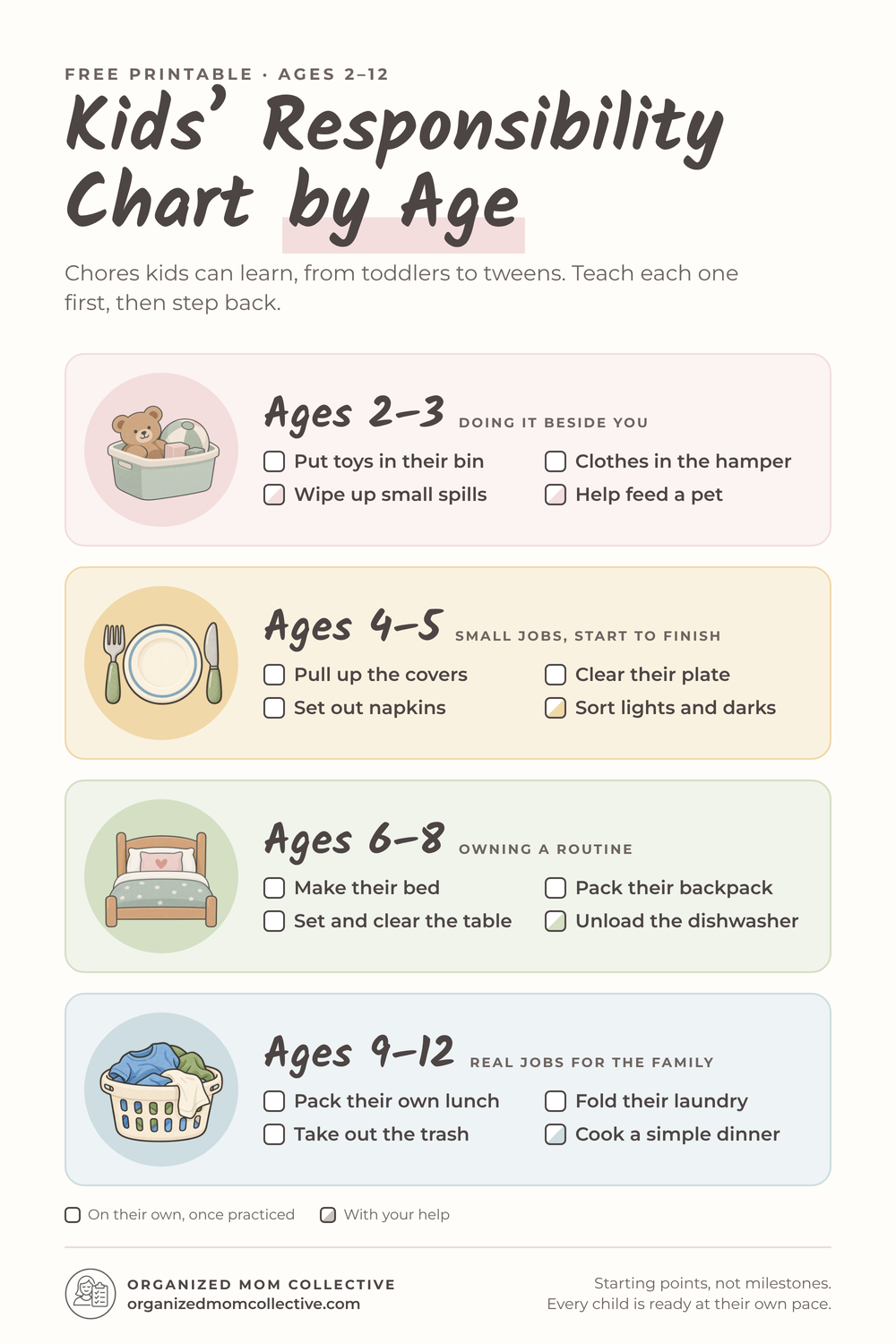
Chores for kids by age at a glance
Ages 2–3
Doing it beside you
- Put toys in their bin
- Clothes in the hamper
- Wipe up small spillswith help
- Help feed a petwith help
Ages 4–5
Small jobs, start to finish
- Pull up the covers
- Clear their plate
- Set out napkins
- Sort lights and darkswith help

Ages 6–8
Owning a routine
- Make their bed
- Pack their backpack
- Set and clear the table
- Unload the dishwasherwith help
Ages 9–12
Real jobs for the family
- Pack their own lunch
- Fold their laundry
- Take out the trash
- Cook a simple dinnerwith help
Age-appropriate chores, age by age
Each age has two lists: jobs most kids can do on their own once they’ve practiced, and jobs they do with you beside them or with an adult handling one part. Every child moves at their own pace, so the younger list is always good practice.
Chores for toddlers (ages 2–3)
At this age a chore is something you do together. It will take longer than doing it yourself. That’s the practice.
- Put toys back in their bin
- Put dirty clothes in the hamper
- Throw their own trash away
- Put books back on a low shelf
- Wipe up small spills with a cloth
- Wash hands before meals, on a step stool
- Carry their cup or plate to the counter
- Help feed a pet: you measure, they pour
- Match socks from the clean laundry
- Water a plant from a small cup
- Put unbreakable groceries on a low shelf
Chores for preschoolers (ages 4–5)
Look for jobs with a clear finish: the plate is at the sink, the coat is on the hook.
- Pull up the covers and put the pillow back
- Get dressed in clothes laid out the night before
- Put toys away before dinner or bed
- Hang up their coat and put shoes away
- Clear their own plate and cup
- Put napkins and spoons on the table
- Put dirty clothes in the hamper
- Feed a pet, with you checking the amount
- Sort laundry into lights and darks
- Put clean clothes in drawers they can reach
- Unload unbreakable dishes and spoons (you take the knives)
- Dust low shelves with a cloth
Chores for 6, 7 and 8 year olds
A 6-year-old may need you nearby for the first few weeks. An 8-year-old who has practiced can often run a whole short routine, like clearing up after dinner.
- Make their bed
- Get dressed and brush teeth using a routine chart
- Pack their backpack for tomorrow
- Set and clear the table
- Put clean clothes in their drawers
- Feed the pet
- Clear their bedroom floor before bed
- Empty small trash cans into the big one
- Unload the dishwasher (you put away sharp knives)
- Wipe the bathroom sink and counter
- Vacuum their room
- Make a simple lunch or snack
Chores for kids 9 to 12
Older kids can do real jobs for the family, not only their own things. Hand over the whole job, including noticing when it needs doing.
- Pack their own lunch and backpack
- Load or unload the dishwasher
- Fold and put away their own laundry
- Take out the trash and recycling
- Strip and remake their bed
- Vacuum or sweep a room
- Wipe the bathroom sink, counter and mirror
- Check the family calendar for their own activities and gear
- Run the washer and dryer
- Clean the toilet and tub with a cleaner you’ve chosen
- Cook a simple dinner, with an adult nearby for the stove
- Plan one family dinner and write its grocery list
Chores are one way to make room for shared family life: everyone has a part, including the kids.
Nagging starts when a job lives in your head and nowhere else. Put it on the chart and into a routine, and the reminder stops depending on you.
The Real-Life Version
Teach three jobs
5 steps
Done. The chart does the asking now.
Example: a responsibility chart for a 7-year-old
| When | Job |
|---|---|
| After getting dressed | Pull up the covers and put the pillow back |
| After dinner | Put your plate and cup by the sink |
| Laundry day | Put clean clothes in their drawers |
Each job is one action with a time, so your child can check it off without asking you. Write your three on the free responsibility chart.
Want more jobs, weekly chores or rewards?
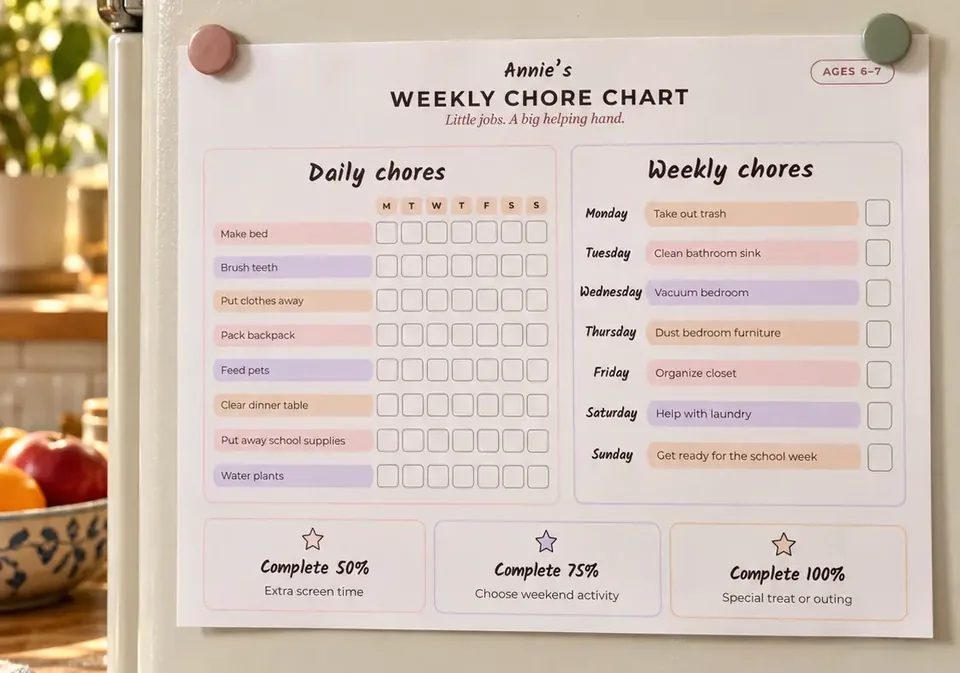
Our free chore chart generator starts from your child’s age. Add their name, choose an age group, edit the suggested chores and rewards, pick your colors, then download the chart to print.
When Life Happens
When the chart stops working
Missed a day? Start with today. Don’t make up yesterday’s boxes. A blank square is information, not a debt.
Busy week? Keep one job. On a late practice night, it’s just the plate to the sink. The habit survives; the rest can wait.
Pushback? Shrink the job and practice again. “Clean your room” becomes “books back on the shelf.” A job that keeps getting skipped is usually too big or not taught yet.
Chores for kids: common questions
What chores are age appropriate for my child?
Use the lists above as a starting point, then watch your child. A job fits if they can do it safely and finish it after some practice. If they can’t yet, do it together or try the younger list.
How many chores should a child have?
Three daily jobs is a good start for most kids, plus one weekly job once they’re older. Add a new one when the current jobs happen without reminders. A short list done every day teaches more than a long one done sometimes.
Should kids get rewards or an allowance for chores?
That’s a family decision, and either can work. Some families keep everyday jobs unpaid, as part of living together, and pay for extra jobs. If you use rewards, keep them small and tied to the week, like choosing Friday’s dinner. The free chart has a celebration box for that.
How do I motivate my child to do chores?
Make the job theirs: their name on the chart, their tick in the box. Notice the effort out loud (“You cleared your plate without being asked”) and celebrate the week together. A child who knows exactly what to do, and sees that it matters to the family, has less to push back on.
What chores can a 6-year-old do?
Once they’ve practiced, many 6-year-olds can make their bed, set and clear the table, feed a pet and pack their backpack. With you nearby, they can unload the dishwasher, wipe the bathroom sink and vacuum their room.
What chores can an 8-year-old do?
An 8-year-old can usually do most of the ages 6–8 list on their own and start jobs from the 9–12 list with you, like folding laundry, taking out the trash or loading the dishwasher.
From Organized Mom Collective
Ready to Help Your Kids Do It Themselves?
A chart tells your child what to do. Our Kids’ Responsibility Cards teach how: each card shows one everyday responsibility, like making the bed or packing a backpack, as a picture and a few simple steps your child can follow without asking you what comes next.
Use them alongside the chart, so “Did you do it?” can become “Check your card.”
Kids’ Responsibility Cards · Coming soon
 Brush My Teeth
- Make My Bed
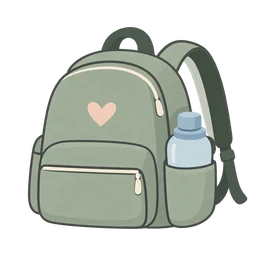 Pack My Backpack
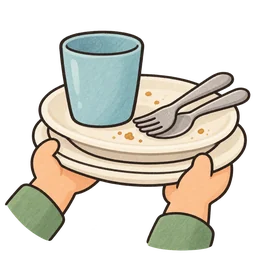 Clear the Table
Make it part of your week
- Bathroom chores for kids by age: three small bathroom jobs that grow with your child.
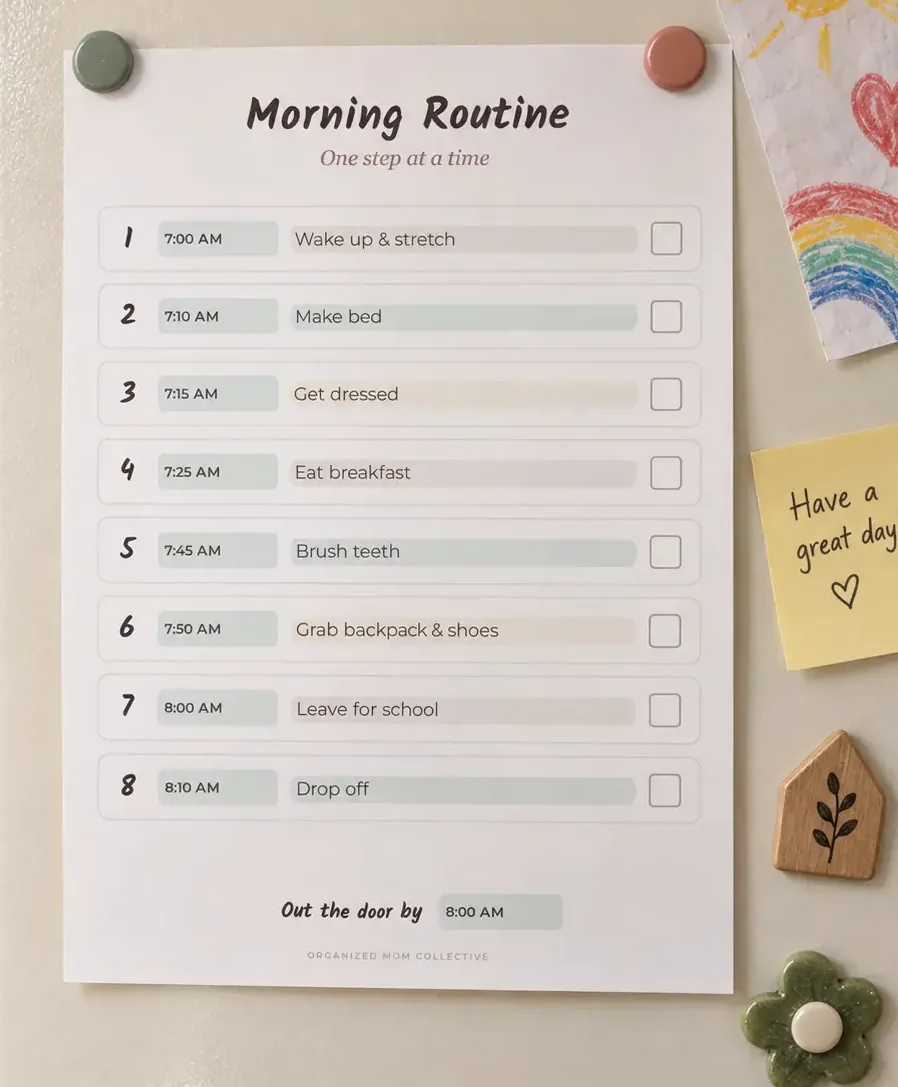
- A morning routine chart: carries the get-ready steps on school mornings.
- Hand over one whole job: if every job still runs through you.
Your Next Small Win
Tonight, pick one job from your child’s age list. Do it together once and agree on what done looks like. Tomorrow, it goes on the chart.