
The backpacks land by the door. Someone asks what’s for dinner. There’s a permission slip nobody remembers seeing. And somehow, you’re the only person who knows what needs to happen next.
You can have labeled baskets, an organized pantry and a beautiful planner and still feel like you’re managing everything alone.
An organized home and an organized family aren’t quite the same thing.
Organized families build small, repeatable habits that make plans visible, responsibilities shared and the next step clear without Mom announcing it. Don’t introduce seven new rules today. Choose one, practice it, and build from there.
Make it yours
Write your family’s first habit
After dinner, everyone clears their place.
Our habit stacks
Start with the one you’re most tired of reminding everyone about. Add the next only when the first one runs without you.

1. Attach new habits to something you already do
In Atomic Habits, James Clear describes habit stacking: attaching a new action to a behavior that’s already familiar.
Instead of inventing a new hour for chores, connect one small responsibility to something that already happens.
Habit stacking · a chart to save
After we…, we…
| After we… | We… |
|---|---|
| Finish breakfast | Take dishes to the sink |
| Come home from school | Hang backpacks and empty lunchboxes |
| Finish dinner | Clear the table together |
| Brush our teeth | Put dirty clothes in the hamper |
| Put on pajamas | Set out tomorrow's clothes |
| Finish Sunday breakfast | Look at the family calendar |
The after–then formula: “After we finish dinner, we each clear our place.” Choose something the family already does, then make the next action small enough to remember without a lecture.
The first action is the reminder for the second. “Clean your room sometime today” requires a child to remember an open-ended job. “After pajamas, clothes go in the hamper” has a clear starting point.
Start with one connection. Add another only when the first is familiar.
2. Keep the family plan where everyone can see it
If school events live in one adult’s inbox, meals in their head and rides in a string of messages, everyone else has to ask that person what’s happening.
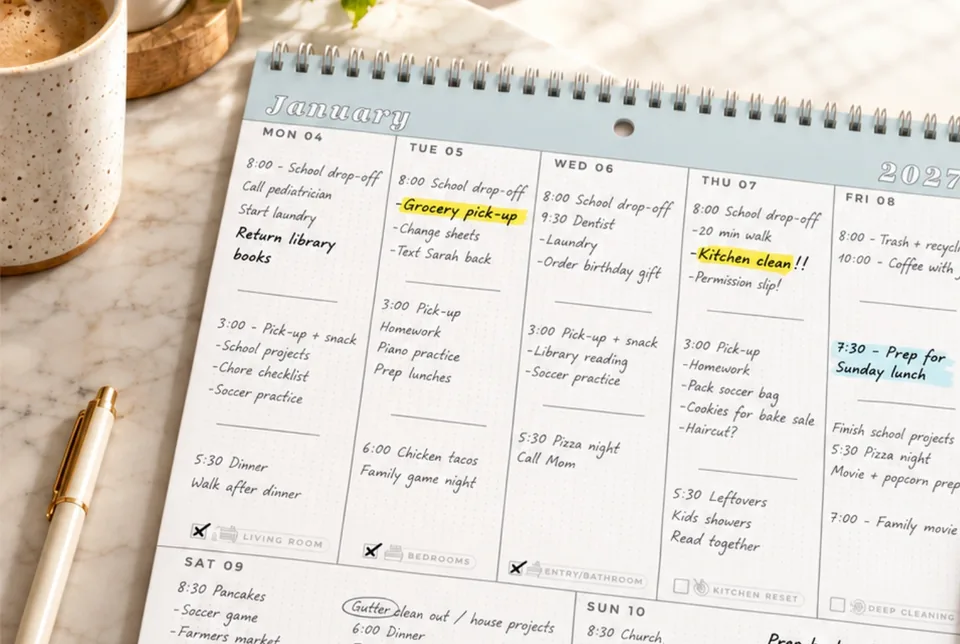
Put the coming week in a shared, visible place: appointments, school activities, who’s driving, dinners on busy nights and anything that needs preparation. Our guide to a family calendar everyone uses shows how.
But visibility is only the first step. Make checking the calendar the habit. After breakfast, each person checks what matters for their day. Young kids can ask what’s next. Older kids can check for library books, forms or sports gear. Adults confirm the responsibilities they own.
The question starts shifting from “Mom, what’s happening?” to “What’s on the calendar?”
3. Make the right thing easier to do
Another practical principle from Atomic Habits is to make a desired behavior obvious and easy.
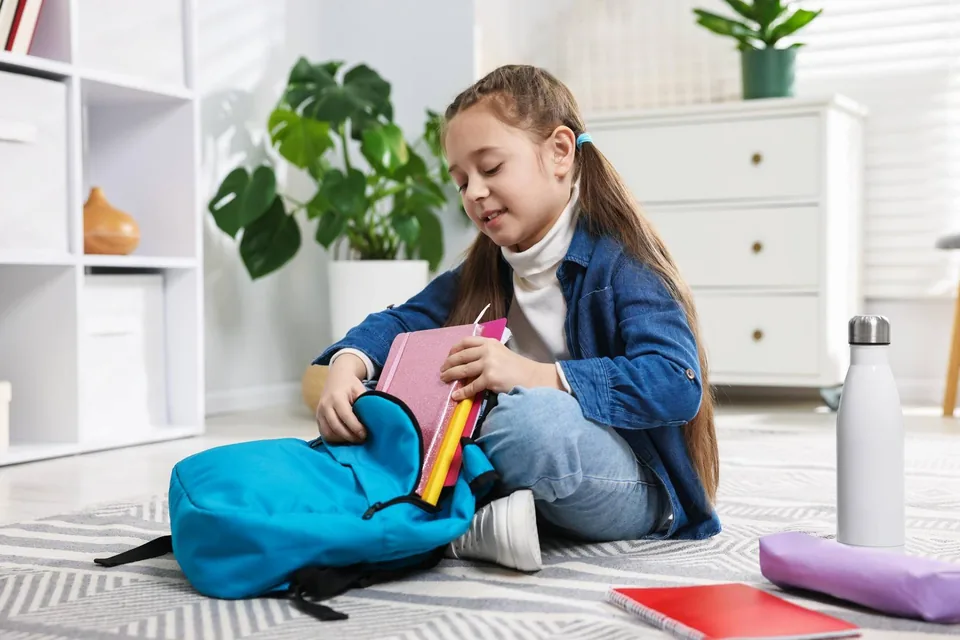
If backpacks land on the floor by the door every afternoon, another reminder might not be the answer. Put a hook where the backpack already lands.
If clothes come off in the bathroom, put the hamper nearby. If toys stay scattered because the bins are too hard to open, use containers the kids can manage. Keep a getting-ready list near the actual shoes and bags, not buried in a drawer.
Change the setup before increasing the reminders. You don’t need matching bins. You need the next action to be easy to see and do.
Our after-school drop zone guide gives one concrete example.
4. Give family members jobs they can own
“Can you put your shoes away?” is a request for help. “After school, shoes go on the rack” can become an owned responsibility.
For a job to belong to someone, they need to know what it is, when it happens and what finished looks like. Teach the job, practice it together and gradually step back.
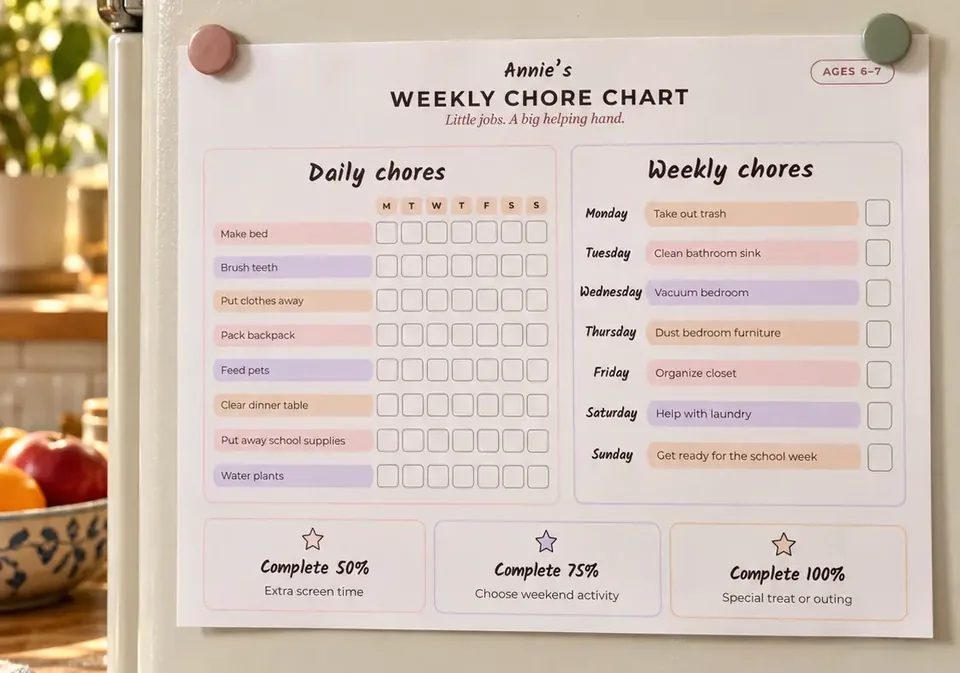
A preschooler might put toys in a basket. A school-aged child might pack a backpack with a visual list. Adults need ownership too: taking laundry includes noticing when it needs doing and getting it put away, not just moving a basket when asked.
Shared work means sharing the remembering and deciding, not only the physical task.
Choose age-appropriate starting points in our chores for kids by age guide.
5. Build short resets into everyday transitions
Organized families don’t have to spend every evening cleaning. They can use natural transitions to put things back.
After school: shoes away, backpacks hung, lunchboxes emptied. After dinner: everyone clears their place and helps reset the kitchen. Before bed: toys go in baskets and tomorrow’s clothes come out.
Dinner ends → table gets cleared → kitchen reset begins. No separate decision about when to start.
Give the reset an ending, too. A few minutes may be all your family needs. If everything isn’t done when the timer ends, stop. You’re building a repeatable habit, not demanding a spotless home.
For a concrete starting point, see our 15-minute daily cleaning routine.
6. Look at the coming week together
Families with activities, appointments and school messages need a regular moment to compare notes.

Choose a repeatable time, perhaps after Sunday breakfast. Look at the week, confirm rides, match dinners to busy nights and make sure unusual jobs have an owner.
Children can bring up a library book, class event or supply they need. Adults can own their pickups, planning and reminders from start to finish.
Before you finish, ask one question: who owns what this week? Check that pickups, dinners, school forms and unusual tasks each have a person. A list without owners often becomes Mom’s list again.
The point isn’t to schedule every minute. It’s to make a few decisions before they become last-minute problems.
Use our 15-minute weekly family reset to run the conversation.
7. Give every habit a busy-day version
Someone gets sick. Practice ends late. The usual routine doesn’t fit.
If your family system depends on a perfect day, it won’t last. Decide in advance what the minimum version looks like.
| Usual habit | Busy-day version |
|---|---|
| 10-minute evening reset | Clear the table and dishes |
| Full bedtime setup | Teeth, pajamas, clothes in hamper |
| Weekly planning session | Check tomorrow and confirm rides |
| Daily cleaning zone | Complete the one necessary task |
| Full backpack check | Check tomorrow’s essential item |
And if you miss a day entirely, restart at the next cue. Don’t stack yesterday’s chores onto today’s.
When Life Happens
When the habit isn't sticking
Everyone forgets? Put the reminder where the action happens and keep the job small.
A child still needs help? Practice together longer. The goal is learning, not immediate independence.
The day falls apart? Do the smallest useful version or restart tomorrow without a backlog.
Make it part of your week
You don’t need to teach all seven habits at once. Pick one frustration, connect the solution to an existing moment, and let the right person own the action.
- Teaching kids independence: how to show a job, practice it and step back.
- Share the mental load: hand off the planning and remembering, not just the errands.
- Share the mental load worksheet: get the jobs out of your head and hand over one whole responsibility.
An organized house can still depend on one exhausted person. An organized family is different. Kids know where their things go. Adults know what they’re responsible for. The schedule and routines are clear enough that no one person has to hold everything in their head.
Organized moms raise organized families.
Not by doing everything better, but by helping everyone learn to play a part.
Your Next Small Win
Tonight, choose one responsibility you’re tired of reminding everyone about. Attach it to a moment that already happens, decide who owns it, and practice it together tomorrow.