By the second week of summer, someone is asking for a screen before breakfast, the shoes are missing, and every activity seems to need you to organize it.
A good summer routine chart for kids is a loose sequence of six daily anchors, not a minute-by-minute schedule. Keep the order familiar, let the times flex and give children a few jobs they can manage themselves.
The Real-Life Version
Make your summer routine chart
6 steps
All done. That’s the whole routine, so stop here.
A sample summer weekday routine
This is an example for a family with elementary-aged children, not a rule about how many hours anyone should spend playing or learning.
| Part of day | What kids can expect |
|---|---|
| Morning | Breakfast, get dressed, brush teeth |
| After breakfast | One responsibility, then independent play |
| Late morning | Outside time, errands or an outing |
| After lunch | Quiet time: books, puzzles or rest |
| Afternoon | Creative play, friends, or agreed screen time |
| Evening | Help with dinner, quick tidy-up, bedtime routine |
Keep the order; change the clock. Camp days, swim lessons, visits with friends and rainy days won’t follow the same times. The chart still tells everyone what comes next.
Make it a chart they can use without asking you
Put the chart at your child’s height, near breakfast or the place where they start their day. Use one row for each anchor. Skip twenty tiny tasks.
Let children choose between two options within an anchor: bike ride or playground, books or coloring. Adults still set the boundaries, but kids can begin managing the ordinary choices.
Try this after breakfast: Your child checks the next picture, finishes one helping job, then chooses a play activity. They don’t need you to narrate the whole morning.
What changes for different ages?
- Ages 3–5: Use three to five pictures with an adult nearby. Focus on breakfast, getting ready, play, rest and bedtime.
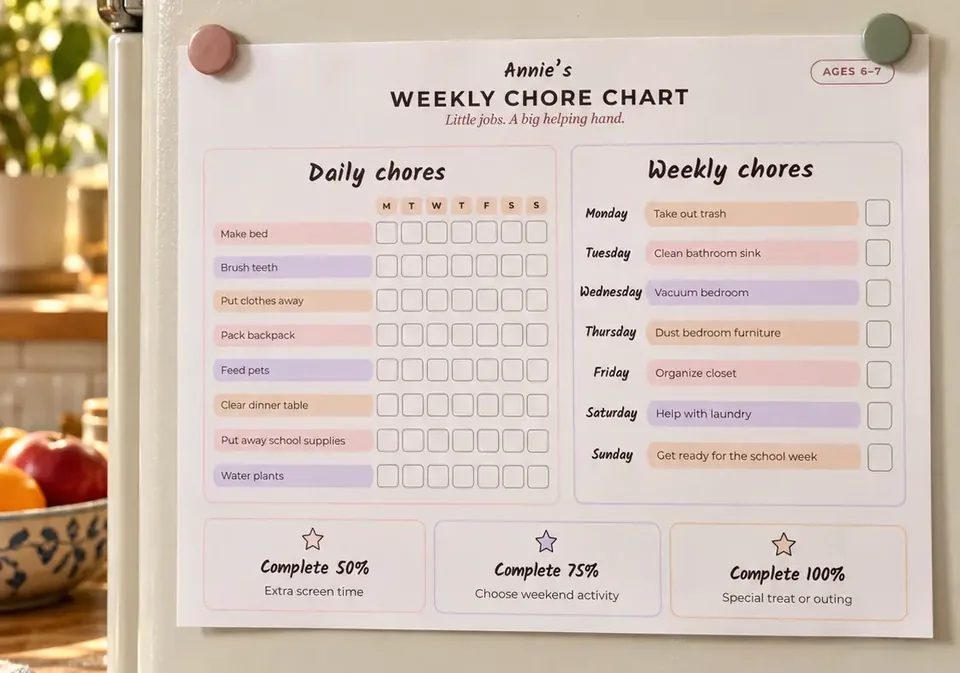
- Ages 6–8: Use five or six anchors. Let kids check off simple jobs and choose between two activities.
- Ages 9–12: Let children help shape the schedule, own a household job and prepare for outings.
Adjust for your child’s development, support needs and your actual family schedule. Our chores by age guide offers practical job ideas.
When Life Happens
When summer doesn't follow the chart
Rain cancels the park? Keep the active block but switch to an indoor game or dance break.
Camp starts early? Use only the morning and evening anchors.
Everyone slept in? Keep the sequence and drop the clock times. You don’t need to catch up.
Make it part of your week
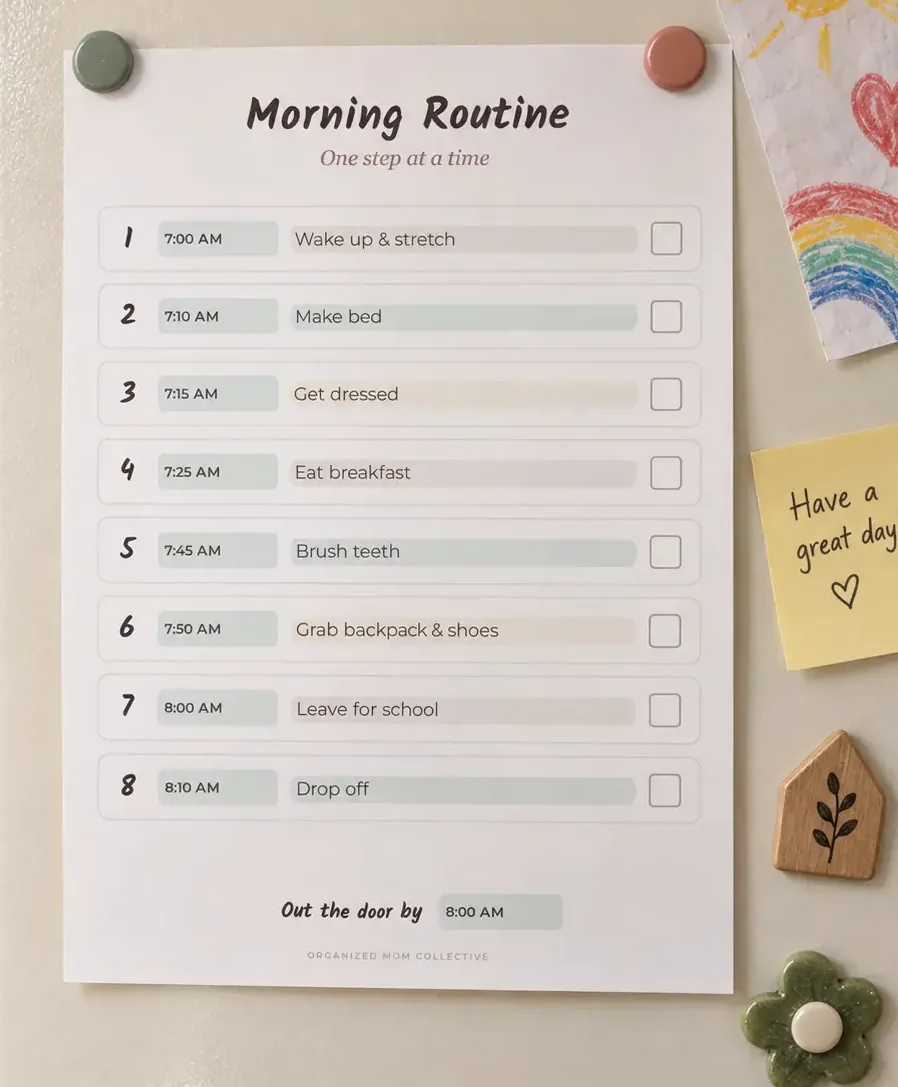
- Make a free routine chart with the summer steps your child can recognize.
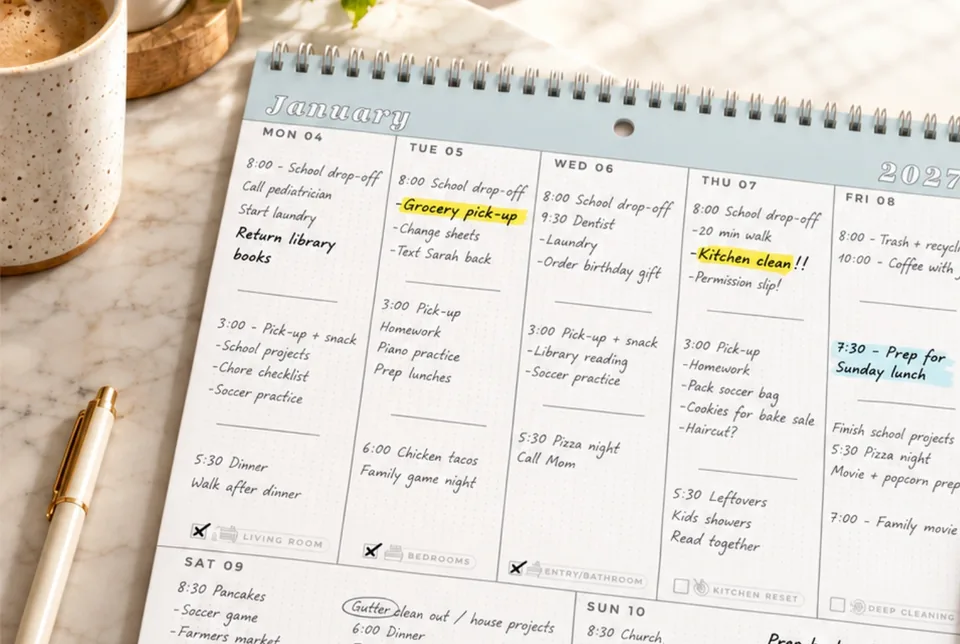
- Try a weekly family reset to see which days have camp, travel or appointments.
- Use the morning routine guide when school starts again.
Your Next Small Win
Tonight, choose six summer anchors together. Tomorrow, practice just the first two after breakfast. A chart works when your child can actually use it.